Table of Contents
- What to Collect Immediately After a Dog Bite
- How to Report a Dog Bite to Animal Control
- Dog Bite Medical Documentation Requirements
- Gathering Witness Statements and Using a Witness Statement Template for Dog Attack Cases
- Digital Evidence and Communication Logs for Your Dog Bite Claim
- The Dog Bite Statute of Limitations Hawaii Residents Must Know
- Conclusion: Building a Strong Dog Bite Claim
- Frequently Asked Questions
Last Updated: October 2, 2026
What to Collect Immediately After a Dog Bite
The average cost per dog bite claim in the United States has risen 209.2% from 2016 to 2025, according to DogsBite.org’s national insurance claim data. That number explains why insurance adjusters scrutinize every detail. If you want to know how to document evidence for a dog bite claim, the answer starts in the first hour, not the first week. At Cummings Law, we’ve seen strong cases weaken because key evidence vanished before anyone thought to save it.
Here’s what to gather right away:
- Photos of your injuries from multiple angles
- The dog owner’s name, address, and phone number
- The dog’s vaccination and license information
- Names and contact details of anyone who saw the attack
- The location and time of the incident
Start with your own safety and medical care. Then collect what you can.
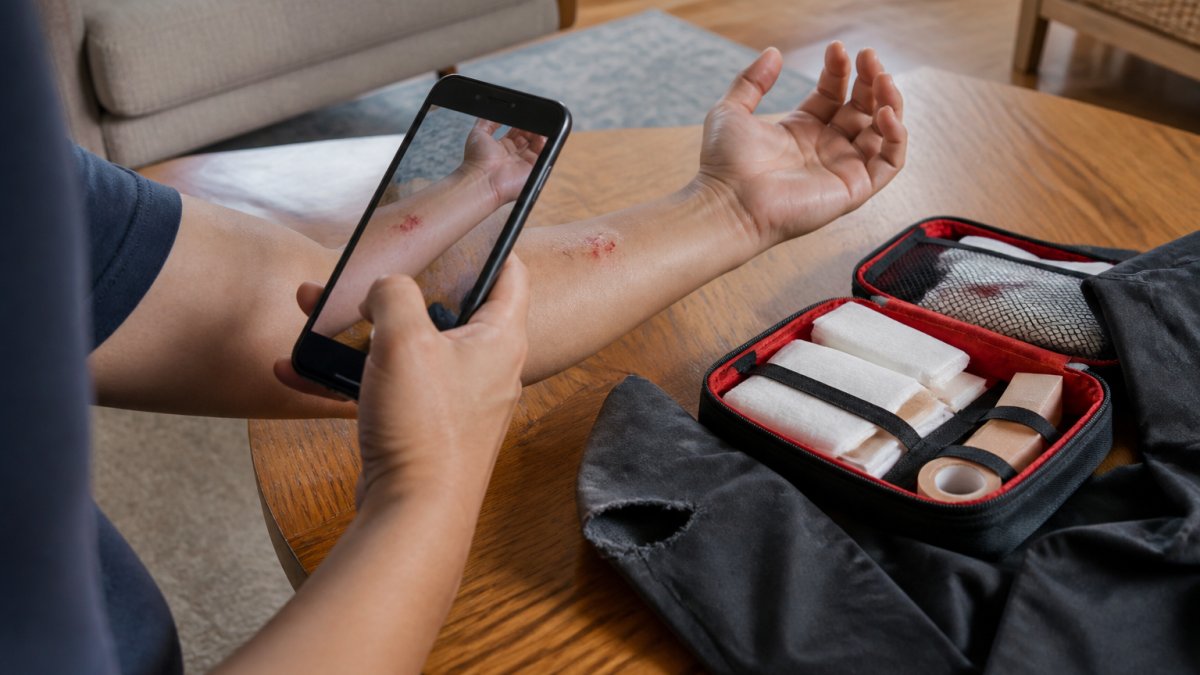
Photographing Injuries and Torn Clothing
Take photos before you clean the wound. Bite marks, bruising, and swelling change fast, and early images carry more weight. Lay torn clothing on a flat surface and photograph it next to a ruler. Keep the clothing itself in a paper bag. Do not wash it.
Identifying the Dog Owner and Vaccination Status
Get the owner’s full name, address, and insurance details if they offer them. Ask for the dog’s rabies vaccination record. Under Texas Department of State Health Services guidance on animal bite investigations, vaccination status shapes both medical treatment and legal claims. If the owner refuses, note that refusal in writing.
How to Report a Dog Bite to Animal Control
Filing an animal control report creates an official record that insurance companies cannot ignore. Call your local animal control agency or police non-emergency line the same day. Give them the date, time, location, and a description of the dog and owner.
Ask for the report number. Then request a copy. This document often captures prior complaints and leash law violations that support a negligence claim later.
Dog Bite Medical Documentation Requirements
Seek medical care within 24 hours, even for small wounds. Doctors document what you cannot: infection risk, tissue damage, and prognosis. That documentation becomes the backbone of your claim, because it is the one category of evidence an insurance adjuster cannot easily dispute, it comes from a neutral third party with no stake in the outcome.
Request copies of:
- Emergency room or urgent care records, including the triage note
- Treatment plans and prescriptions
- Imaging results (X-rays, ultrasounds, or MRIs if ordered)
- Follow-up visit notes
- Specialist referrals and their reports
- Vaccination records if rabies post-exposure treatment was given
How to Request and Organize Your Records
Most hospitals and clinics have a medical records department and a standard release form. Ask for the complete record, not a summary, summaries omit the triage notes and nursing observations that often contain the most useful detail, such as how the wound looked on arrival and what you said about pain.
- Request records in writing and keep a copy of the request.
- Ask for records in both paper and electronic format if available.
- Expect a processing window of several business days to a few weeks, and a per-page fee in many states.
- Store everything in one labeled folder, physical or digital, organized by date.
Ask each provider to note in your chart that the injury is related to a dog bite, and give them the date of the incident. A record that says “laceration, unknown cause” is far less useful than one that ties the wound to a specific event.
Tracking Treatment Plans and Prognosis
Keep a recovery journal. Note pain levels, missed work, and how the injury limits daily tasks. Scarring and disfigurement should be photographed monthly as they heal, in consistent lighting and from the same angles, so the progression is visible. This record supports pain and suffering damages later.
A few habits make the journal far more useful:
- Use a consistent scale. Rate pain 0-10 each day at the same time.
- Record function, not just feeling. “Could not grip a coffee cup” is more concrete than “hand hurt.”
- Note missed events. Workdays lost, workouts skipped, school pickups you could not make.
- Log every provider visit with the date, the provider’s name, and what changed in your treatment plan.
Connecting Medical Records to Your Damages
Medical records do more than prove you were hurt. They map onto the specific categories an adjuster evaluates:
- Past medical expenses, every bill, copay, and prescription tied to the bite.
- Future medical expenses, a physician’s note that scarring revision or physical therapy may be needed.
- Pain and suffering, the combination of clinical findings and your journal.
- Lost earning capacity, a doctor’s note restricting lifting, standing, or driving.
- Psychological injury, a referral or diagnosis documented in the chart.
A complete medical record does three jobs at once: it proves the injury happened, it proves the injury was serious, and it gives your attorney a dollar figure to anchor the demand. Request the full record, keep it organized by date, and make sure every provider knows the cause.
National Institutes of Health guidance on bite wound evaluation stresses that prompt, thorough documentation of the injury supports both medical and legal outcomes.
Gathering Witness Statements and Using a Witness Statement Template for Dog Attack Cases
Witness statements are the evidence most likely to disappear. Memory fades, and people move. Collect statements within days, not months.
A witness statement template for dog attack cases should include:
- Witness name, phone, and email
- Date, time, and location of the incident
- What the witness saw, in their own words
- Whether the dog was leashed or restrained
- Whether the victim provoked the dog
- The witness’s signature and date
Advocate Magazine’s analysis of bite wound evidence notes that bite wounds serve as independent physical proof of an incident, which matters when you are the only witness.
Digital Evidence and Communication Logs for Your Dog Bite Claim
Digital records now decide many dog bite claim disputes, because they carry something a memory cannot: a verifiable timestamp. Most guides stop at “take screenshots.” That advice is incomplete. A screenshot can be cropped, edited, or challenged as a fabrication. What insurers and courts increasingly want is the original message thread, the original photo file, and a record of when each item was created and last modified.
Preserving Text Messages, Emails, and Social Media
Treat every message with the dog owner, their insurer, or their attorney as potential evidence from the moment you send it.
- Do not delete anything. Deleting a message that looks unhelpful, a text where you said the dog “seemed fine” before it lunged, looks like spoliation of evidence. Courts and adjusters treat intentional deletion far worse than the original message.
- Do not edit or “clean up” posts. If you posted about the incident on social media, leave the post as-is. Editing captions or deleting comments creates a timeline gap that opposing counsel will exploit.
- Screenshot with context. Capture the full thread, the contact name or number at the top, and the timestamp on each message. A screenshot of a single bubble with no sender and no date proves very little.
- Export the original file when possible. Most phones let you export a full text conversation as a PDF or share the original photo file. The original file preserves metadata, the hidden data that records the device, date, time, and sometimes GPS coordinates where a photo was taken. A screenshot strips that metadata out.
- Back up to the cloud and to a second location. Cloud backups sync automatically, which is convenient but risky: if someone gains access to your account, they can alter or delete the source. Keep a second copy on a physical drive or a separate account.
Before you hand your phone to anyone, an adjuster, an investigator, or even your own attorney’s paralegal, export the relevant threads and photos first. Once a device leaves your hands, you lose control of what gets viewed, forwarded, or deleted.
Communication Logs: What to Write Down and What to Avoid
A communication log is a simple running document, a notebook, a spreadsheet, or a notes app, where you record every interaction connected to the claim.
For each contact, log:
- Date and time
- Who you spoke with (full name, company, and role)
- How you communicated (phone, text, email, in person)
- What was said, in neutral language
- Any follow-up promised or required
A common pattern that weakens claims is an early, well-meaning text to the dog owner along the lines of “no hard feelings, I’m sure it was an accident.” Adjusters pull those messages and argue you admitted the incident was minor.
Never give a recorded statement to an insurance adjuster before speaking with an attorney. Adjusters are trained to ask open-ended questions that produce quotable answers. If you have already given one, write down everything you remember saying as soon as possible.
Documenting Psychological Injuries
Anxiety, sleep disruption, and a new fear of dogs are compensable non-economic damages, but they are almost impossible to prove after the fact unless you document them as they happen. Most guides ignore this entirely.
- Note symptoms in your recovery journal with dates: nightmares, avoiding parks or neighbors’ pets, flinching at barking, difficulty concentrating at work.
- Tell your treating physician. A symptom that appears only in your personal journal is easy to dismiss; a symptom your doctor recorded during a visit is part of your medical record.
- Ask about a referral. If symptoms persist beyond a few weeks, a mental health professional’s notes carry significant weight and create an independent record.
- Track sleep and function, not just feelings. “Slept four hours, called in sick twice this week” is more persuasive than “felt anxious.”
Tracking Financial Losses With a Structured Log
Out-of-pocket costs add up quietly, and insurers will not reimburse what you cannot show. Build a simple expense log with these columns:
| Date | Expense type | Description | Amount | Proof |
|---|---|---|---|---|
| 10/04 | Medical | Urgent care copay | $75 | Receipt |
| 10/06 | Travel | Round trip to follow-up | $18 | Mileage log |
| 10/09 | Lost wages | Half day missed | Per pay stub | Employer note |
Track at minimum:
- Medical bills, copays, and prescription costs
- Mileage to and from every appointment (the IRS standard mileage rate is a common benchmark for calculating this)
- Lost wages, including overtime and tips you can substantiate
- Parking, tolls, and rideshare fares for medical visits
- Over-the-counter supplies: bandages, antibiotics, scar treatments
- Household help you had to pay for because of the injury
Keep receipts in one folder, physical and digital, and reconcile the log monthly. A clean, dated expense log is one of the easiest ways to increase a settlement demand, because it converts vague “this has been expensive” into a number the adjuster can verify.
Hill & Moin LLP’s guidance on evidence in dog bite litigation identifies photographs of injuries as the single most persuasive form of evidence in these cases. Digital records are the close second, but only if they are preserved in their original, timestamped form.
The Dog Bite Statute of Limitations Hawaii Residents Must Know
Hawaii applies a two-year statute of limitations to personal injury claims, including dog bites. That deadline starts on the date of the incident. Miss it, and you lose the right to sue.
Hawaii also follows strict liability for dog bites in many situations, meaning you may not need to prove the owner was negligent. But provocation and trespassing can reduce or bar recovery. Because these rules carry exceptions, confirm your specific deadline with a qualified attorney rather than relying on general information. National Institutes of Health guidance on bite wound evaluation stresses that prompt, thorough documentation of the injury supports both medical and legal outcomes.
Conclusion: Building a Strong Dog Bite Claim
Evidence fades fast: wounds heal, witnesses forget, and messages get deleted. The people who recover fair compensation are the ones who documented everything early and kept it organized. Cummings Law has obtained over $47,000,000 for clients in recent years, and our team handles the investigation, evidence gathering, and negotiations so you can focus on healing. We charge no attorneys’ fees or court fees until your case is complete.
Frequently Asked Questions
What is the statute of limitations for a dog bite claim in Hawaii?
Hawaii law sets a two-year statute of limitations for personal injury claims, including dog bites. This means you generally must file a lawsuit within two years from the date of the incident. However, exceptions can apply, such as if the injured person was a minor. Because missing this deadline can bar your claim entirely, consult a Hawaii personal injury attorney as soon as possible to confirm the deadline for your specific situation.
How do I prove liability in a dog bite case?
Hawaii follows strict liability for dog bites, meaning the owner is liable if their dog bites someone in a public place or while the victim is lawfully in a private place. To prove liability, you need to show the bite occurred, you were lawfully present, and you did not provoke the dog. Evidence like animal control reports, witness statements, and photographs of the scene help establish these elements. An attorney can help gather and present this evidence.
What information should I collect from the dog owner after a bite?
Collect the owner’s full name, address, phone number, and insurance information. Ask for the dog’s vaccination status, especially rabies documentation, and the dog’s license number if available. Note the date, time, and location of the bite. If the owner refuses to provide details, report the incident to animal control immediately. This information is critical for identifying the responsible party and supporting your dog bite claim.
Should I take photos of my dog bite injuries?
Yes. Photographs of your injuries are among the most persuasive evidence in a dog bite claim. Take clear, well-lit photos from multiple angles on the day of the bite and regularly as you heal. Include the scene of the attack, the dog involved, and any torn clothing. These images document the severity of the bite, support your medical records, and help demonstrate pain and suffering damages to an insurance adjuster or jury.