Table of Contents
- What a Personal Injury Deposition Is and Why It Matters
- Who Is Present and What Happens Step by Step
- How Long Does a Personal Injury Deposition Last?
- Common Deposition Questions in Personal Injury Cases
- Tips for a Successful Personal Injury Deposition
- Remote Depositions: Etiquette and Practical Setup
- What Happens After a Deposition in a Personal Injury Case
- Frequently Asked Questions
Last Updated: September 14, 2026
What a Personal Injury Deposition Is and Why It Matters
A personal injury deposition is a formal, out-of-court proceeding where attorneys question a witness under oath, and the answers become sworn testimony that can later be used at trial. According to Metier Law Firm’s overview of settlement rates, 90% to 95% of personal injury cases settle out of court, which means the deposition is often the single most consequential event in the entire case. At Cummings Law, we tell clients the same thing before every deposition: this is not a conversation. It is a test of discipline and consistency, and the record you build here shapes what your case is worth.
The Role of Sworn Testimony in the Discovery Phase
Depositions sit inside the discovery phase, the period when both sides exchange evidence before trial. Your sworn testimony locks in your version of events. If your account changes later, defense counsel can use the earlier transcript to challenge your credibility, a process known as impeachment. That is why preparation matters more than memory.
Who Is Present and What Happens Step by Step
A typical deposition room holds the witness, your attorney, defense counsel, and a court reporter who creates the verbatim record. Depending on the case, you may also see a videographer, a paralegal for either side, an interpreter, and, if the defendant is a business, a corporate representative. Each person has a defined role, and knowing who is in the room removes a layer of uncertainty before you sit down.
The process follows a predictable sequence:
- The oath. The court reporter swears you in and places you under oath. From this moment, every answer is testimony.
- Appearances on the record. Your attorney and defense counsel state their names, firms, and who they represent. This is housekeeping, but it is also the first sign that the record is being built deliberately.
- Preliminary instructions. Your attorney may ask a few background questions first, your name, address, employment, to ease you into the format and establish the basics on the record.
- Defense counsel’s examination. This is the bulk of the deposition. Expect questions on liability, damages, prior injuries, medical treatment, and your daily life since the accident. Sessions often run for hours.
- Exhibit review. Defense counsel may hand you photographs, medical bills, incident reports, or social media printouts and ask you to identify them. Read each exhibit fully before answering. If a document is unfamiliar, say so.
- Objections. Your attorney can object when a question is improper, for example, when it calls for speculation, assumes facts not in evidence, or invades a protected communication. In most civil depositions, counsel objects and the witness still answers, with the objection preserved for the judge to rule on later.
- Breaks. You are generally entitled to short breaks at reasonable intervals. Use them. Fatigue is one of the most common reasons witnesses give sloppy answers late in the day.
- Closing on the record. Your attorney may ask a few clarifying questions, then both sides state that the deposition is concluded. The court reporter certifies the transcript afterward.
The questioning itself is adversarial by design. Defense counsel is not there to help you, they are there to lock in testimony that can be used to limit or defeat your claim. Expect them to probe liability, damages, and every detail of your medical treatment, and to return to the same topics from different angles to test consistency.
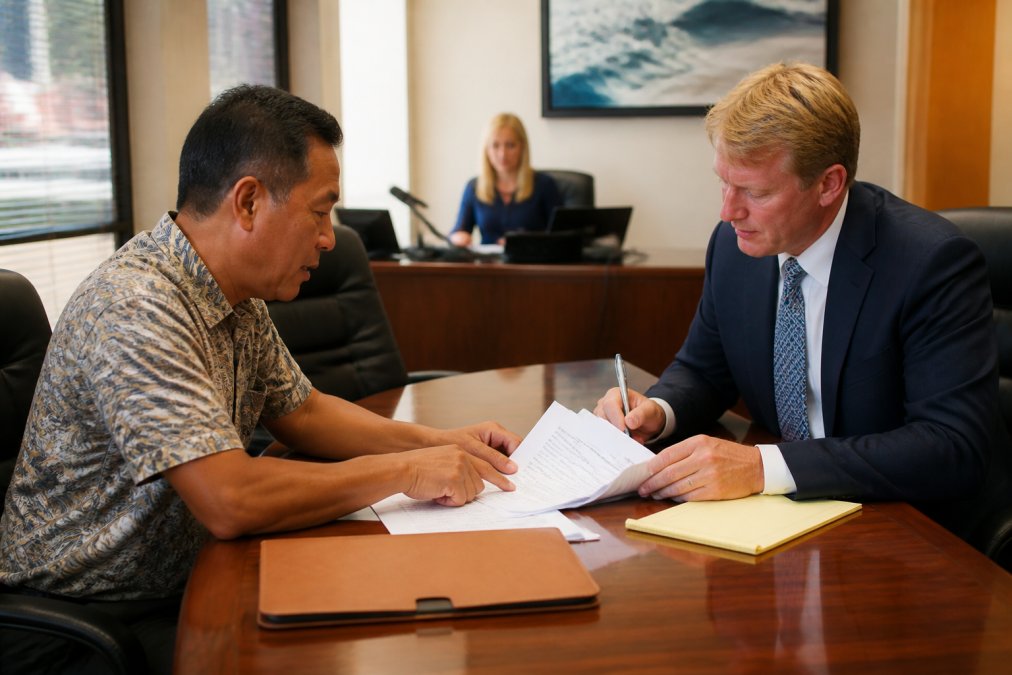
From Oath to Objections: How the Record Is Built
Every word you say is transcribed and can be read back to a jury. Research from Bronx Law Firm on deposition trends found that 44% of attorneys expect remote testimonies to rise in 2026, but the mechanics of building a clean record have not changed. Answer only what is asked. Do not volunteer, guess, or fill silence.
A few mechanics are worth knowing before you sit down:
- The transcript is literal. “Uh-huh,” “I think,” and “maybe” all appear in the record. Answer with words, not sounds.
- You can ask for a question to be read back. If you lose the thread, ask the court reporter to repeat the question. That is not a sign of weakness, it is a sign of care.
- You can correct yourself. If you misspeak, say so on the record immediately. “I want to correct my last answer” is a normal and accepted phrase.
- You can ask to speak with your attorney. In most jurisdictions, you may consult with your lawyer about a specific question, though the scope of that privilege varies. Ask your attorney before the deposition what the ground rules are in your case.
- You can decline to speculate. “I don’t know” and “I don’t recall” are complete answers when they are true. Guessing is what gets witnesses into trouble.
Treat every question as if it will be read aloud at trial, because it can be. The goal is not to win the deposition, it is to give consistent, honest answers that your attorney can defend later.
How Long Does a Personal Injury Deposition Last?
Most personal injury depositions last between two and seven hours, with a typical session running three to four. Length depends on the number of parties, the complexity of your injuries, and how many documents defense counsel wants to walk through. Your attorney can object to overly long or repetitive questioning, and many jurisdictions cap deposition time by rule. If you need breaks, ask for them.
Common Deposition Questions in Personal Injury Cases
Expect defense counsel to work through your background, the accident, your injuries, and your treatment in chronological order. Typical questions include:
- What were you doing in the moments before the accident?
- Have you ever been injured or treated for this body part before?
- How has the injury affected your daily routine and work?
- What medications and providers have you used since the accident?
- Have you posted about the accident or your recovery on social media?
A common mistake is treating a deposition like a casual conversation with the insurance adjuster. Anything you say can be quoted back to you at mediation or trial, and casual phrasing about your recovery can be used to argue your injuries are not serious.
Tips for a Successful Personal Injury Deposition
The best preparation is not memorizing answers. It is understanding the rules of the room. A common mistake we see is witnesses who try to recall every detail perfectly instead of simply telling the truth consistently. Guidance from Oberg Law Office on deposition discipline makes the point plainly: a deposition tests discipline, not memory. If you do not know something, say so. If you do not understand a question, ask for it to be repeated or rephrased.
Handling Trick Questions and Managing Stress
Defense counsel may ask leading questions, stack two questions into one, or misstate your earlier testimony to see if you will correct them. Pause before answering. Let your attorney object. On the psychological side, sleep, eat, and arrive early. Anxiety narrows attention, and a witness who is rattled is easier to lead.
Ask your attorney for a mock deposition before the real one. Practicing the format, not the answers, is what calms most witnesses. One run-through typically exposes the questions that catch you off guard.
Remote Depositions: Etiquette and Practical Setup
Remote depositions follow the same rules as in-person ones, with a few additions. Join early to test your camera and microphone. Sit at a desk against a plain wall, keep your phone out of reach, and look at the camera when you answer. Do not read from notes, and do not let anyone in the room feed you answers. Opposing counsel will notice, and the transcript will show it.
What Happens After a Deposition in a Personal Injury Case
Once the deposition ends, the court reporter prepares a transcript. RG Injury Law’s overview of post-deposition timelines notes that settlement talks typically begin within a few weeks after depositions wrap, which is why the transcript matters so much. Your answers become a reference point for every negotiation that follows.
Transcript Review, Corrections, and Settlement Talks
You will receive the transcript and have a set period, often 30 days under the applicable rules of civil procedure, though the exact window varies by jurisdiction and can be shortened or extended by agreement, to review it and submit corrections. This step is more consequential than most witnesses realize, and it is where a careful review can protect your case.
Here is how the process typically works:
- The court reporter delivers the transcript. You and your attorney receive a copy, sometimes in draft form before it is certified.
- You read it against your memory. Read slowly. Flag anything that does not match what you said or meant.
- You prepare an errata sheet. This is the formal document where you list corrections. Each entry identifies the page and line, the original text, the corrected text, and the reason for the change. Common reasons include transcription errors, misheard words, and answers you want to clarify.
- Your attorney reviews the errata sheet before it is served. Substantive changes, not just typographical fixes, can be used by opposing counsel to challenge your credibility, so your attorney will want to vet each one.
- The corrected transcript becomes the official record. From that point forward, the certified transcript and any errata sheet are what get used at mediation, in motions, and at trial.
A few practical points about the review window:
- Do not treat it as a chance to rewrite your testimony. Courts and opposing counsel scrutinize substantive changes. A correction that shifts your story can do more damage than the original answer.
- Fix transcription errors promptly. If the reporter wrote “I did not see the light” when you said “I did not see the light change,” that is a legitimate correction.
- Clarify, do not contradict. If an answer was incomplete, you can add context. If it was wrong, say so, but be ready to explain why.
- Keep the errata sheet factual. Reasons like “to clarify” or “transcription error” are standard. Reasons that read like a legal argument will draw objections.
From there, your case usually moves toward mediation or settlement negotiations, where the strength of your deposition drives the number on the table. Defense counsel will have read the transcript closely and will quote your answers back to you in the negotiation room. Your attorney will use the same transcript to show where your testimony is consistent, credible, and supported by the medical records.
If the case does not settle, the deposition transcript can be used at trial in several ways: to impeach you if your testimony changes, to read into the record if you are unavailable, or to support summary judgment motions. That is why the review window matters, it is your one structured opportunity to make sure the record reflects what you actually meant to say.
| Stage | What Happens | Typical Timing |
|---|---|---|
| Deposition | Sworn testimony recorded | Case-specific |
| Transcript delivery | Court reporter prepares and sends the transcript | Weeks after deposition |
| Transcript review | You read the transcript and prepare an errata sheet | Often within 30 days of delivery |
| Errata service | Corrections are served on all parties | After your review |
| Settlement talks | Negotiation begins using the certified record | Weeks after deposition |
| Mediation or trial | Resolution or verdict | Months later |
Ask your attorney how long your review window is and put the deadline on your calendar the day the transcript arrives. Missing it can waive your right to correct the record.
Frequently Asked Questions
Do most personal injury cases settle after a deposition?
Yes. Between 90% and 95% of personal injury cases settle out of court, and only about 4% go to trial. Settlement talks often begin within a few weeks after depositions wrap. A deposition gives both sides a clearer picture of the evidence and testimony, which frequently pushes a case toward mediation or a negotiated resolution rather than a jury trial.
What should you not do during a personal injury deposition?
Do not guess, speculate, or volunteer information beyond what the question asks. Avoid arguing with defense counsel, and never answer a question you do not understand. If you are unsure, ask for clarification. Also, do not discuss your case with anyone other than your attorney during breaks. These habits protect the credibility of your sworn testimony and prevent impeachment later in litigation.
Is a deposition the same as trial testimony?
No. A deposition happens during the discovery phase, before trial, and is usually held in a conference room rather than a courtroom. There is no judge present, though a court reporter records everything under oath. Trial testimony happens in court before a judge or jury. Deposition testimony can still be used at trial to impeach a witness or preserve testimony if the witness cannot appear.
How can you tell if your deposition went well?
A deposition went well when your answers were consistent, truthful, and limited to what you actually know. Your attorney will review the transcript for accuracy and any objections raised. If you stayed calm, avoided speculation, and gave clear responses, the record supports your case. If defense counsel struggled to shake your account, that often strengthens your position in settlement negotiations or mediation.