Table of Contents
- Immediate Actions After Being Hit by an Uninsured Driver
- Report the Uninsured Driver Car Accident to Police
- Gather Evidence and Document the Scene
- Notify Your Insurance Company Promptly
- Understanding Uninsured Motorist Coverage After an Accident
- How to File an Uninsured Motorist Claim
- Uninsured Motorist Property Damage Coverage Explained
- Protecting Your Rights and Recovery Options
- Frequently Asked Questions
Last Updated: October 12, 2026
Immediate Actions After Being Hit by an Uninsured Driver
When an uninsured driver hit you, it creates an immediate crisis. Your safety comes first. Everything else follows from that. The moments right after a collision are chaotic, but what you do now shapes your entire recovery.
Check yourself and your passengers for injuries. Look for pain, dizziness, or bleeding. Some injuries don’t feel serious at first. Adrenaline masks real damage. If anyone feels hurt, call 911 immediately. Get medical attention even if injuries seem minor. A doctor’s report becomes critical evidence later.
Move to safety if possible. Turn off your engine. Turn on hazard lights. If you’re in traffic and safe to move, get to the shoulder or a parking lot. If you can’t move safely, stay in your vehicle with seatbelts fastened. Warn other drivers by turning on hazards or placing warning triangles behind your car.
Check for injuries and seek medical attention
Medical care is your foundation for recovery. Injuries from car accidents often develop over hours or days. Whiplash, internal injuries, and concussions don’t always show symptoms immediately.
Go to an emergency room or urgent care. Get a full evaluation. Request written documentation of all findings. Take photos of any visible injuries. Keep every receipt and medical record. These documents prove your damages later.
Follow all medical advice. Attend every appointment. Skip treatments and insurers will argue your injuries weren’t serious. Consistency in care strengthens your claim significantly.
Move to safety and prevent further harm
Your location matters for both safety and evidence. If your vehicle is blocking traffic and it’s safe to move, drive to a nearby parking lot or shoulder. Turn on your hazard lights. Stay visible to other drivers.
If you can’t safely move your vehicle, stay inside with doors locked. Call 911 if you feel unsafe. Do not exit your vehicle into traffic.
Once you’re secure, do not leave the scene. Leaving creates legal problems and makes your case harder to prove. Stay at the location until police arrive and document everything.
Report the Uninsured Driver Car Accident to Police
Call police immediately. Do not wait. Police reports are legal proof the collision happened. They create an official record of fault and details.
Tell the dispatcher your location, that vehicles are involved, and whether anyone is injured. Stay on the line until help arrives.
When police arrive, explain what happened. Stick to facts you know directly. Do not speculate about the other driver’s insurance status yet. Simply state what you saw. If the other driver admits to being uninsured, let police document that.
Request the police report number. Get the officer’s name and badge number. Ask when the report will be available. In most cases, you can access it online within days using the report number.
The police report becomes your strongest evidence. It’s an objective third-party account. Insurance companies and courts give it significant weight. Without it, your case depends entirely on your word against theirs.
Gather Evidence and Document the Scene
Evidence wins cases. Collect everything at the scene while details are fresh.
Take photos of vehicle damage from multiple angles. Photograph the other vehicle’s license plate, make, model, and color. Get wide shots showing the accident location, road conditions, and traffic signals. Photograph any skid marks, debris, or road hazards that contributed to the collision.
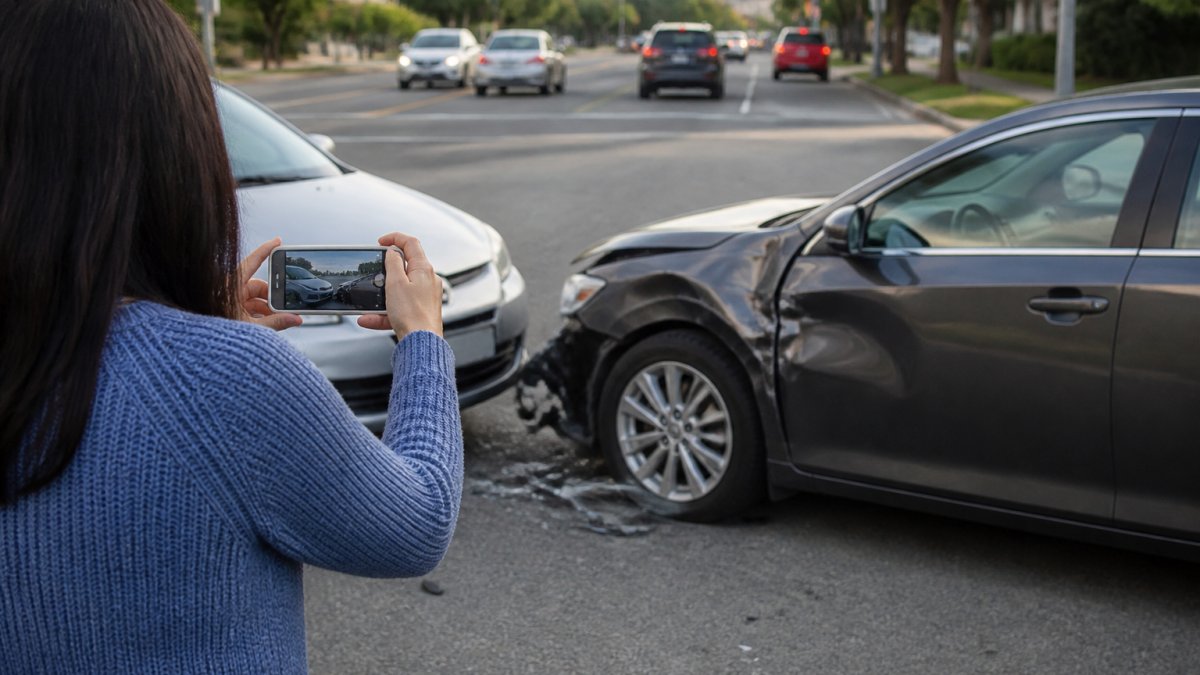
If weather was a factor (rain, fog, darkness), photograph that too. Weather conditions matter for liability. Get photos of your injuries if they’re visible. Document everything the moment it happens. Memory fades. Photos don’t.
Write down what happened while it’s fresh. Note the date, time, weather, road conditions, speed, and exactly how the collision occurred. Write the other driver’s words if they admitted fault. These notes support your account later.
Collect witness information
Witnesses are gold. They have no stake in the outcome. Their statements carry weight.
Ask anyone who saw the collision for their name, phone number, and address. Ask what they saw. Write it down immediately. Do not rely on memory. Get contact information from at least two witnesses if possible.
Take photos of witnesses or note their appearance. This helps verify their identity later. Witnesses disappear. Phone numbers change. Get information while they’re present.
If witnesses leave before police arrive, give their information to the officer. The police report will include witness statements, creating an official record.
Exchange driver and vehicle information
Get the other driver’s name, phone number, address, driver’s license number, and vehicle registration. Write it all down. Do not rely on memory.
Ask for their insurance information. Get the company name, policy number, and agent contact. Write it exactly as they provide it. Many uninsured drivers will lie about having insurance. Get this in writing.
Take a photo of their driver’s license. Take a photo of their vehicle registration. Take a photo of their insurance card if they have one. These photos prove what they showed you.
Note their vehicle’s make, model, color, and license plate number. If they refuse to provide information, note that too. Do not argue or become confrontational. Stay calm. Let police handle refusals.
Notify Your Insurance Company Promptly
Contact your insurance company within 24 hours. Many policies require prompt notification. Delays give insurers reasons to deny claims.
Tell them an uninsured driver hit you. Provide the police report number. Give them the other driver’s information. Answer their questions honestly and completely.
Ask your agent about your coverage. Ask specifically about uninsured motorist coverage. Ask about uninsured motorist property damage coverage. These are different protections. Your policy may include one, both, or neither. Understanding your coverage matters.
Do not accept a settlement offer immediately. Do not sign anything without reading it carefully. Insurance companies move fast because they want to close cases cheaply. Your injuries may develop over weeks. Your damages may be higher than you initially think.
Keep detailed records of all communication with your insurer. Write down dates, times, who you spoke with, and what was said. Save all emails and letters. This documentation protects you if disputes arise later.
Understanding Uninsured Motorist Coverage After an Accident
Uninsured motorist coverage is protection you buy for yourself. It covers you when the other driver has no insurance. This coverage pays for medical bills, lost wages, and pain and suffering.
Most policies include uninsured motorist coverage. Some drivers skip it to save money. Check your policy. If you don’t have it, you face serious financial risk after being hit by an uninsured driver.
Uninsured motorist coverage has limits. Your policy states a maximum amount the insurer will pay. Common limits are $25,000, $50,000, or $100,000 per person. If your damages exceed your limit, you’re responsible for the difference.
Your coverage applies only if the other driver is truly uninsured. If they have insurance but it doesn’t cover the collision, that’s a different situation.
The uninsured motorist claim is against your own insurance company, not the other driver’s. Your insurer investigates to confirm the other driver is uninsured. This process takes time. Be patient and provide all requested documentation.
How to File an Uninsured Motorist Claim
Filing a claim starts with notification, which you’ve already done. Now the formal process begins.
Your insurance company will assign a claims adjuster. This person investigates your claim. They verify the other driver is uninsured. They review your medical records and expenses.
Provide everything they request. Submit medical bills, receipts, pay stubs showing lost wages, and repair estimates for your vehicle.
Keep a detailed injury journal. Write down your pain levels, limitations, and how the injury affects daily life. This documentation supports your claim for pain and suffering damages.
Do not post about your accident on social media. Insurance companies review social media. Posts can be used against you.
Do not accept the first settlement offer if it seems low. Respond with your own demand based on your actual damages. Negotiation is normal.
If you and your insurer cannot agree, you have options. You can request mediation. You can hire an attorney.
Uninsured Motorist Property Damage Coverage Explained
Property damage coverage pays for vehicle repairs or replacement. If the other driver has no insurance, your uninsured motorist property damage coverage applies.
This coverage is separate from uninsured motorist coverage for injuries. Many policies include one but not the other. Check your policy to see what you have.
Uninsured motorist property damage has limits, just like injury coverage. Your policy states the maximum amount. If repair costs exceed your limit, you pay the difference.
File a property damage claim with your insurance company. Get repair estimates from mechanics. Your insurer may require estimates from multiple shops. Submit all estimates.
Some policies include collision coverage instead. Collision coverage pays for vehicle damage regardless of fault. If you have collision coverage, use that instead of uninsured motorist property damage.
If your vehicle is totaled, your insurer calculates its market value. They pay that amount minus your deductible.
Protecting Your Rights and Recovery Options
You have legal rights after being hit by an uninsured driver. Understanding these rights protects you.
You have the right to file an uninsured motorist claim with your own insurance company.
The other driver is still liable for your damages. Even without insurance, they owe you money.
Many uninsured drivers have few assets. Winning a judgment against them doesn’t guarantee payment. This is why uninsured motorist coverage exists.
You have a limited time to file a claim or lawsuit. This is called the statute of limitations.
Document everything. Keep medical records, receipts, repair estimates, photos, and written accounts. This documentation proves your damages. Without it, you have no basis for compensation.
If your claim is denied or you receive an unfair settlement offer, hire an attorney. Insurance companies have teams of lawyers. You deserve representation too.
Being hit by an uninsured driver creates financial and physical hardship. Medical bills pile up. Your vehicle needs repair. Lost wages add pressure.
Frequently Asked Questions
What should you do immediately after an uninsured driver hits you?
First, check yourself and passengers for injuries and call emergency services if needed. Move to a safe location away from traffic if possible. Call the police to report the collision and obtain an accident report. Exchange contact and driver’s license information with the other driver, take photos of vehicle damage and the scene, collect witness names and contact details, and notify your own insurance company as soon as possible. Document everything you remember about the accident, including the time, location, and how the collision occurred.
Can you file an uninsured motorist claim if the other driver has no insurance?
Yes, if you carry uninsured motorist (UM) or underinsured motorist (UIM) coverage on your own auto insurance policy, you can file a claim for your damages. UM coverage applies when the at-fault driver has no insurance; UIM coverage applies when their coverage limits are insufficient. You’ll need to file a claim with your own insurance company and provide documentation of the accident, including the police report, medical records, repair estimates, and proof that the other driver was uninsured. Your insurance company will investigate the claim and determine what compensation you’re entitled to under your policy limits.
What happens if you’re hit by an uninsured driver and don’t have UM/UIM coverage?
Without uninsured motorist coverage, your options are more limited. You may still pursue a lawsuit against the at-fault driver directly to recover damages for medical bills, lost wages, property damage, and pain and suffering. However, collecting from an uninsured driver can be difficult, especially if they lack significant assets. You might recover through a personal injury claim, but enforcement can be challenging. This is why having adequate UM/UIM coverage is crucial, it protects you financially when the other driver cannot. An attorney can help you explore all available options and pursue maximum recovery.
How long does it take to resolve an uninsured motorist claim?
The timeline varies depending on the complexity of your case, the severity of injuries, and whether liability is disputed. Simple property-damage-only claims may resolve in weeks to a few months. Claims involving serious injuries and significant medical treatment typically take several months to over a year, as your medical condition must stabilize and all treatment costs must be documented. Your insurance company will investigate the claim, exchange information with the other driver’s insurer (if applicable), and negotiate a settlement. If a settlement cannot be reached, the claim may proceed to litigation, which can extend the timeline further. An experienced attorney can help expedite the process and ensure you receive fair compensation.