Table of Contents
- Can Tourists Sue for Hawaii Accidents: Your Legal Rights
- Understanding Hawaii’s Tort System vs. No-Fault Rules
- Statute of Limitations for Personal Injury Claims
- How to File a Personal Injury Claim as a Tourist
- Documenting Evidence After a Travel Accident
- Medical Payments Coverage and Insurance Coordination
- Comparative Negligence and Your Claim
- Why You Need Local Legal Representation
Last Updated: August 15, 2026
Can Tourists Sue for Hawaii Accidents: Your Legal Rights
Yes, tourists can sue for accidents in Hawaii. Whether you’re visiting from the mainland or abroad, you have the right to pursue a personal injury claim if someone else’s negligence caused your injury. Many tourists assume their non-resident status limits their options, but that’s a misconception. Hawaii courts hear personal injury claims from visitors regularly.
The challenge most tourists face isn’t legal standing, it’s navigating an unfamiliar legal system while managing injuries, medical bills, and travel disruptions. Understanding the process upfront makes a significant difference.
Contact a local personal injury attorney within the first 30 days of your accident. This window is critical for preserving evidence, witness statements, and your legal options.
Understanding Hawaii’s Tort System vs. No-Fault Rules
Hawaii operates under a tort liability system, which means the person responsible for causing your accident is legally liable for your damages. In a tort system, you have the right to sue the at-fault party and recover compensatory damages for medical expenses, lost wages, pain and suffering, and other losses. The at-fault driver’s liability insurance typically covers these claims, up to their policy limits.
You must prove that the other party’s negligence caused your injury. The burden of proof in civil cases is "preponderance of the evidence," meaning it’s more likely than not that the defendant caused your injury. This is a lower standard than the criminal "beyond a reasonable doubt" threshold, which works in your favor.
Hawaii’s tort system gives you the right to recover full damages from the at-fault party, but you must prove their negligence. This is why documentation and witness statements are critical immediately after an accident.
Statute of Limitations for Personal Injury Claims
The statute of limitations for personal injury claims in Hawaii is six years from the date of your injury. However, this deadline is far more restrictive than it sounds. Most cases resolve within 12-24 months through negotiation with the insurance company. If you wait years to pursue your claim, you’ve lost leverage with the insurer and may face challenges gathering evidence, locating witnesses, or obtaining medical records.
For tourists specifically, the clock starts the moment your injury occurs, not when you return home. Many visitors delay seeking legal representation until they’re back on the mainland, losing critical early opportunities to strengthen their case.
Missing the six-year deadline means losing your right to sue entirely. But waiting even a few months significantly weakens your negotiating position with insurance companies. Act within the first 30 days to maximize your claim’s value.
How to File a Personal Injury Claim as a Tourist
Filing a personal injury claim as a tourist involves five key steps.
Step 1: Report the Accident and Seek Medical Care
Your first priority after any accident is your health and safety. Seek immediate medical attention for any injuries, no matter how minor they seem. This ensures your injuries are properly documented in medical records and creates the official paper trail that insurance companies and courts rely on.
Report the accident to local authorities if it involves a vehicle, property damage, or another person’s negligence. Get a police report number. If the accident occurs at a business, report it to management and ask for an incident report.
Step 2: Gather Witness Information and Contact Details
If anyone saw your accident, get their name, phone number, email address, and a brief statement about what they saw. Identify the at-fault party and get their insurance information. For tourists, this step is particularly important because you’ll be leaving the state. Once you’re gone, contacting witnesses becomes exponentially harder.
Step 3: Document Everything in Writing
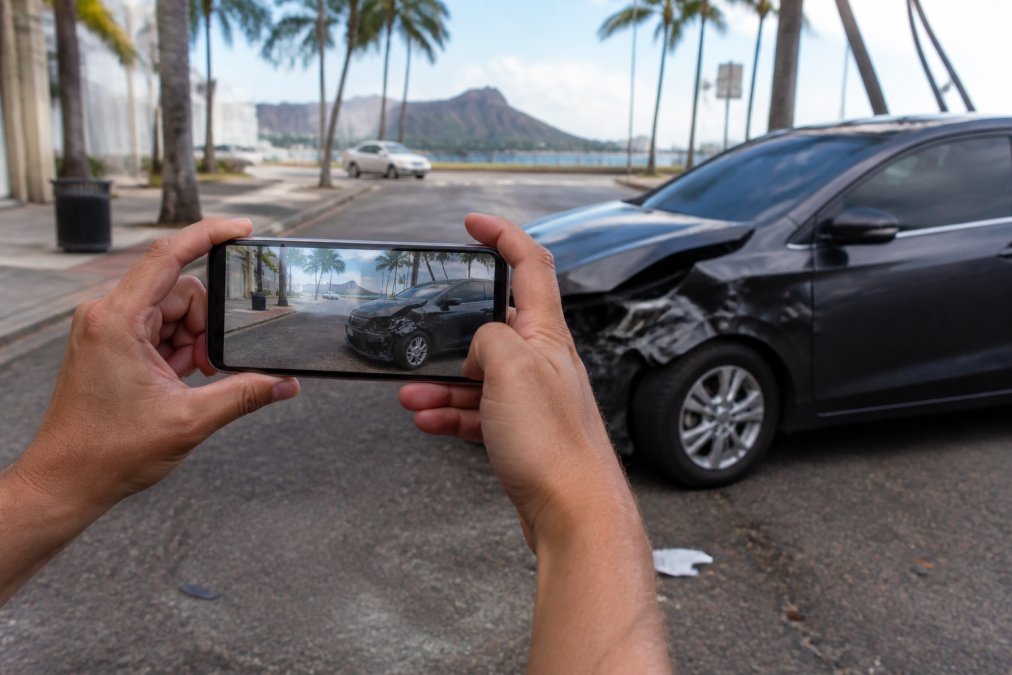
Photograph or video the accident scene, your injuries, and any property damage. Write down your own account of what happened while it’s fresh, including the date, time, location, what you were doing, how the accident occurred, and how you felt immediately afterward.
Keep all medical receipts, bills, and records. Save all communication with insurance companies, including emails, letters, and notes from phone calls.
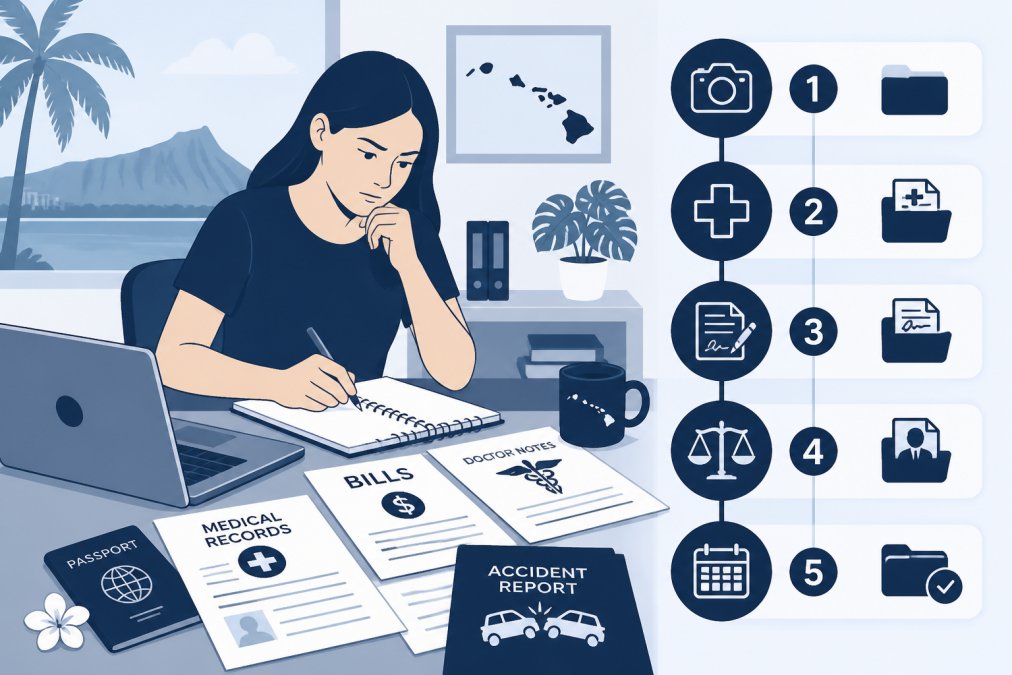
Step 4: Notify the At-Fault Party’s Insurance
Contact the at-fault party’s insurance company and report the claim. Provide basic information about the accident, but don’t give a detailed recorded statement without consulting an attorney first. Insurance adjusters are skilled at getting you to say things that minimize your claim’s value.
Keep detailed records of every communication with the insurance company, including the adjuster’s name, date, and what was discussed.
Step 5: Consult with a Personal Injury Attorney
This is the most important step. A personal injury attorney protects your rights and ensures you don’t accidentally damage your claim through statements to insurance companies or missed procedural deadlines. Insurance companies take claims more seriously when represented by counsel, and settlement offers improve significantly.
Cummings Law works on a contingency basis, meaning you pay nothing upfront. We only collect a fee if we recover compensation for you.
Documenting Evidence After a Travel Accident
Strong evidence is what transforms a claim from a casual dispute into a compelling case. Medical records form the foundation and establish that you were injured and require treatment. Get copies of every medical report, test result, prescription, and bill.
Photographs and video capture details that witnesses forget and written descriptions miss. Photograph your injuries at different stages of healing and the accident scene. Witness statements carry significant weight because they’re considered independent corroboration. Communication records with the at-fault party, their insurance company, and medical providers create a timeline. Receipts and bills for medical treatment and accident-related costs become part of your damages.
Create a digital folder with all accident-related documents organized by category: medical records, photographs, witness statements, insurance correspondence, and receipts.
Medical Payments Coverage and Insurance Coordination
Medical payments coverage (often called MedPay) is insurance that covers your medical expenses regardless of who was at fault. If the at-fault party has MedPay coverage, their insurance pays your medical bills directly.
Personal Injury Protection (PIP) is similar to MedPay but typically available through your own auto insurance policy if you were injured in a vehicle accident. Check your policy to see if you have PIP coverage.
Your own health insurance may also cover accident-related injuries. However, health insurers often have subrogation rights, meaning they can seek reimbursement from the at-fault party’s insurance once you settle your claim. An attorney helps coordinate these payments to maximize your net recovery.
Multiple insurance policies may cover your medical expenses. Understanding which policy pays first, and what subrogation rights apply, prevents overpayment and ensures you keep more of your settlement.
Comparative Negligence and Your Claim
Hawaii follows a "comparative negligence" rule, which means your recovery can be reduced if you’re found partially at fault for the accident. However, as long as you’re less than 50% at fault, you can still recover damages.
If a jury determines you were 20% at fault and the defendant was 80% at fault, your damages award is reduced by 20%. This rule protects tourists because it prevents the at-fault party from using minor contributions to your injury as a complete defense.
Insurance companies will try to shift blame to you to reduce their liability. This is why documentation and witness statements are critical, they establish what actually happened.
Why You Need Local Legal Representation
Navigating a personal injury claim in an unfamiliar state is challenging without the added complexity of being a non-resident. Local attorneys understand Hawaii’s specific rules, the local court system, and how insurance companies in the state typically operate.
Local representation signals to insurance companies that you’re serious about your claim. Adjusters take cases more seriously when handled by attorneys licensed in their state. Cummings Law has recovered over $47,000,000 for clients in recent years, including settlements exceeding $15 million, $10 million, and $2.75 million.
For tourists, having an attorney removes the burden of managing your claim while recovering from injuries and dealing with travel disruptions. You can focus on healing while we handle the legal complexity and pursue maximum compensation.
Tourists injured in accidents where the other party’s negligence is clear, medical expenses are significant, or the at-fault party’s insurance company is slow to respond or offering inadequate settlements.
If you’ve been injured in an accident while visiting, don’t navigate the legal system alone. The decisions you make in the first few weeks directly impact your case’s value and your ability to recover full compensation. Cummings Law provides free consultations to discuss your specific situation, answer your questions, and explain your rights. We work on contingency, you pay nothing unless we recover compensation for you. Call for a consultation and let us handle the legal complexity while you focus on recovery.
Frequently Asked Questions
What is the statute of limitations for personal injury claims if I'm a tourist injured in Hawaii?
In Hawaii, you generally have two years from the date of injury to file a personal injury lawsuit. However, this deadline can be affected by circumstances such as when you discovered the injury or if the at-fault party left the state. Since you're a visitor, acting quickly is essential, consult with a personal injury attorney immediately to ensure your claim doesn't expire and to understand any exceptions that may apply to your specific situation.
Can I file a personal injury claim as a tourist without returning to Hawaii for court?
Yes, many cases can be settled without requiring your presence at trial. Your attorney can handle negotiations with the at-fault driver's insurance company and represent you in settlement discussions. However, if your case goes to trial, you may need to return for testimony. A local attorney can discuss settlement options and explain what involvement may be required based on the strength and complexity of your claim.
How does Hawaii's comparative negligence rule affect my accident claim?
Hawaii follows a comparative negligence system, meaning your compensation can be reduced by your percentage of fault in the accident. For example, if you're found 20% at fault, your settlement is reduced by 20%. However, you can still recover damages if you're less than 50% responsible. An experienced personal injury attorney will investigate the accident thoroughly to minimize any claims of your negligence and maximize your recovery.
What should I document immediately after a travel accident to protect my claim?
Collect the at-fault driver's insurance information, driver's license, and vehicle details. Take photos of vehicle damage, accident scene, and any visible injuries. Get contact information from witnesses. Keep medical records, receipts for treatment, and a written account of what happened. Document lost wages and travel disruptions. This evidence is crucial for your personal injury claim and helps your attorney build a strong case for full compensation of your accident-related injuries.
This article was written using GrandRanker