Last Updated: October 23, 2026
Quick Summary
A Hawaii police report gives your insurer a neutral account of the crash, including fault, injuries, and damage, and the Hawaii Police Department accepts insurance purposes as a valid reason to request one. You can request it in person or by phone through the district station that handled your crash, and a partial report may be released before the full report is ready.
- Ask the responding officer for the report number before leaving the scene to speed later requests.
- Bring photo ID and proof of involvement, such as your insurance card, to the district station.
- Adjusters pull the officer’s fault determination, witness contacts, and citations from the report.
- Errors like a missing injury note are fixed through a supplemental report or addendum, not an edit.
- Cummings Law works on contingency, so no attorneys’ fees or court fees until the case is complete.
Table of Contents
- Why a Hawaii Police Report Matters for Your Insurance Claim
- How to Get a Hawaii Accident Report
- Using a Police Report for a Car Insurance Claim
- Correcting Errors on a Police Report
- Filing an Insurance Claim Without a Police Report
- When to Bring in a Hawaii Personal Injury Attorney
- Frequently Asked Questions
Why a Hawaii Police Report Matters for Your Insurance Claim
A Hawaii police report is the official record of a crash, and it often decides how smoothly your insurance claim moves forward.
Insurers lean on that record heavily. According to the Hawaii Police Department’s guide to obtaining a police report, victims may request a report for insurance purposes, and a partial report can sometimes be released before the full report is ready.
Why does this matter so much? Because memory fades and stories change. A written report locks in the facts early.
Here is what the report typically does for you:
- Confirms the date, time, and location of the crash
- Names the drivers, passengers, and witnesses
- Records the officer’s view of fault
Without that record, your claim rests on your word against the other driver’s. That is a much harder position to defend.
Ask the responding officer for the report number before you leave the scene. That single number makes every later request faster, whether you call the station or walk in.
How to Get a Hawaii Accident Report
You can get a Hawaii accident report in person or by phone through the district station that handled your crash.
Start with these steps:
- Note the report number and the date of the crash.
- Call or visit the district station that responded.
- Bring photo ID and proof you were involved, such as your insurance card.
- Ask whether a partial report is available while you wait.
- Pay any copy fee the station quotes you at the counter.
Processing times vary by station and workload. Ask for a realistic window when you submit your request, and follow up if it passes.
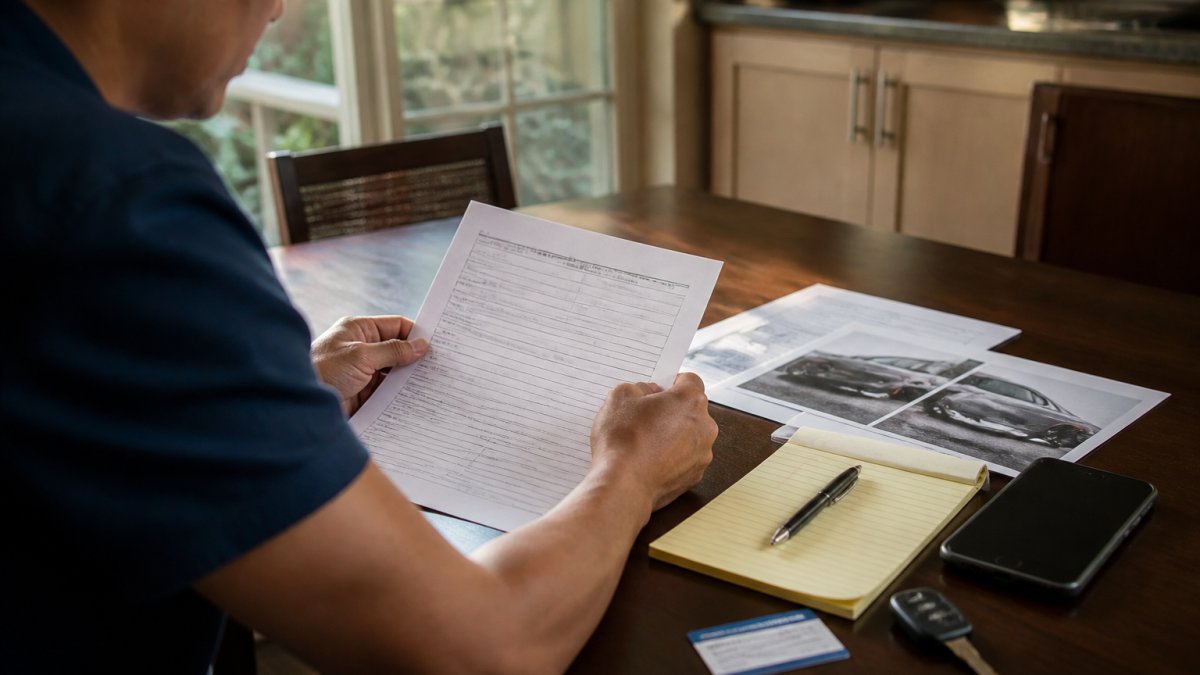
Requesting a Report in Person or by Phone
In-person requests usually move fastest. You can review the form, fix mistakes on the spot, and leave with a clear answer on timing.
Phone requests work well if you are injured or live far from the station.
For a fuller walkthrough of the request process, see our guide on how to get a police report after a Hawaii accident.
Here are the steps the Hawaii Police Department outlines for requesting your crash report.
| Step | What to do |
|---|---|
| 1 | Note the report number and crash date |
| 2 | Call or visit the responding district station |
| 3 | Bring photo ID and proof of involvement |
| 4 | Ask whether a partial report is available |
| 5 | Pay any copy fee quoted at the counter |
Using a Police Report for a Car Insurance Claim
A police report for a car insurance claim does most of its work in the first few weeks. The adjuster reads it before anyone calls you, and it shapes the tone of the whole file.
What Information Adjusters Pull From the Report
Adjusters look for a handful of specific items:
- The officer’s fault determination
- Statements from both drivers
- Witness names and contact details
A citation against the other driver helps your liability argument. A citation against you hurts it, which is why accuracy matters.
The report is evidence, not a verdict. Insurers still run their own liability review, and they can dispute an officer’s conclusion. That is where having your own records pays off.
Dealing with an adjuster who is using the report to limit your payout is its own skill. Our guide on how to handle insurance adjusters covers what to say and what to avoid.
Correcting Errors on a Police Report
Errors on a police report are common, and they can cost you money if you ignore them.
Common mistakes we see:
- The other driver’s insurance information is wrong or missing
- Your injury was reported as “none” when you were hurt
- The location or direction of travel is inaccurate
Contact the records division of the station that handled the crash and ask about their correction process. Many departments add a supplemental report or an addendum rather than editing the original.
Keep your own evidence too. Our page on [what evidence is needed for a car accident claim](/2026/10/19/what-evidence-is-needed-for-a-car-accident-claim/) explains the full picture.
Do not wait months to flag an error. The longer a wrong detail sits in the file, the more the insurer treats it as settled fact, and the harder it becomes to unwind.
Filing an Insurance Claim Without a Police Report
You can still file an insurance claim without a police report. It is harder, but it is not fatal to your case. This happens more than people expect: some crashes are never reported, some reports take weeks, and some minor collisions never get an officer on scene at all.
Building the Record Yourself
If you have no report, build the record yourself:
- Take photos of all vehicles, skid marks, road conditions, and nearby signage
- Collect names and numbers from witnesses while they are still on scene
- Save your medical bills, treatment notes, and imaging reports
Your own insurer may still require a report for certain claims. Ask them directly what they need and in what timeframe, and get the answer in writing if you can.
Claims Without Physical Injury and Hawaii-Specific Exceptions
Some guidance implies a physical injury is required to recover for emotional distress. That oversimplifies eligibility. Hawaii law recognizes claims for negligent infliction of emotional distress and intentional infliction of emotional distress, and the standards differ. A common pattern is that a claim tied to a physical injury is more straightforward, while a claim without physical injury faces a higher bar and requires evidence that the distress was serious and genuinely caused by the defendant’s conduct.
Property-Damage-Only Contexts and Their Limits
Hawaii has a specific statute addressing serious emotional distress arising solely from property damage. Read carefully, that statute does not establish a general right to recover emotional distress damages any time property is damaged. It sets conditions and limits, and courts apply it narrowly. If your crash involved only vehicle damage and no injury, do not assume emotional distress damages are available, and do not assume they are categorically barred.
Practical Trade-Offs When No Report Exists
Without a report, liability often turns on the quality of your own evidence. A prompt, consistent timeline and early medical treatment carry more weight than a story reconstructed months later. If the other driver’s insurer disputes fault, the absence of an official report makes witness statements and physical evidence more important, not less.
For the full filing process when no report exists, our guide on how to file a personal injury claim in Hawaii walks through the steps, deadlines, and evidence.
Do not wait for a report that may never come before notifying your insurer. Notice deadlines can be shorter than the report-processing window, and late notice is its own problem.
When to Bring in a Hawaii Personal Injury Attorney
Hire a Hawaii personal injury attorney when fault is disputed, injuries are serious, or an insurer is already pushing back. Those three signals rarely improve on their own. But the timing question is more nuanced than a single checklist, because Hawaii deadlines and claim type change how quickly you need to act.
A Practical Decision Checklist
Use this checklist to decide whether a consultation is timely:
- The other driver denies fault or blames you
- Your injuries required ongoing treatment or specialist care
- The police report contains errors you cannot fix through the records division
One checked box is a reason to at least get a case evaluation. Two or more is a reason to call promptly.
Hawaii Deadlines and the Effect of Claim Type
Deadlines in Hawaii are not one-size-fits-all. The limitation period can vary by defendant and by claim type. Claims against a government entity, for example, generally require earlier written notice than claims against a private driver, and the window can be measured in months rather than years.
Because these periods differ, do not rely on a generic “two-year” or “three-year” figure you read online. Verify the applicable limitation period for your specific claim promptly, ideally in the first few weeks after the crash, and calendar it.
What to Bring to an Initial Consultation
A productive first meeting is mostly about organization. Bring:
- The police report or report number, plus any supplemental reports
- Photos of vehicles, injuries, and the scene
- Medical records, bills, and treatment notes to date
- A written timeline of events, including when symptoms appeared
Prepare a short list of questions: Who will handle my file? What is your fee arrangement? What expenses might I be responsible for? How often will I receive updates? A clear answer to those four questions tells you a lot about fit.
Costs, Contingency Fees, and Case Expenses
Cost is the worry we hear most. Cummings Law works on a contingency basis, so there are no attorneys’ fees or court fees until the case is complete.
Our team has obtained over $47,000,000 for clients in the past few years. Brian Cummings is well-respected for courtroom performance, and every case gets personalized attention.
If you are weighing whether local counsel matters, read our explanation of why hiring a local Hawaii injury attorney matters.
Deadlines vary by defendant and claim type, so the safest move is to verify yours early. The report starts your claim, but it does not finish it, the sooner someone reviews the file for gaps, the less chance a wrong detail sets your settlement ceiling.
Frequently Asked Questions
Can I file an insurance claim without a police report in Hawaii?
Yes, you can file an insurance claim without a police report, but the report strengthens your position. The Hawaiʻi Police Department notes that victims needing a report for insurance purposes may receive a partial report before the full version is ready. Without a report, your insurer will rely on your account, witness statements, photos, and medical records. Gather as much documentation as possible and let your adjuster know a report is pending.
How do I get a copy of my Hawaii accident report?
The Hawaiʻi Police Department says you can request a report in person or by calling your district station. Identify yourself as a victim and explain that you need it for insurance purposes. Bring a photo ID and any case number you received at the scene. Processing times vary by district, so call ahead to confirm hours and what to bring.
What should I do if my police report contains incorrect information?
Contact the investigating officer or the district station that handled your case and ask about the correction process. Keep a copy of the original report and note exactly what is wrong, such as a misspelled name, wrong date, or inaccurate fault description. Correcting errors on a police report early matters because insurers and attorneys rely on it to evaluate liability. Document your request in writing where possible.
Does a police report determine who is at fault in an insurance claim?
No. A police report is one piece of evidence, not a final ruling on fault. Insurance adjusters use it alongside photos, witness statements, vehicle damage, and medical records to evaluate liability. If the report places fault on you but the evidence shows otherwise, an attorney can help challenge that conclusion. Cummings Law offers a free consultation to review your report and claim.
A police report can carry your claim a long way, but it cannot answer every question an insurer will raise. When the report is wrong, missing, or working against you, the difference often comes down to who is reading it alongside you. Cummings Law offers a free consultation, contingency fees with no upfront cost, and a track record of over $47,000,000 recovered for clients. Call for a consultation and get a clear read on what your case is worth.