Table of Contents
- Immediate Actions at the Accident Scene
- How to Document Motorcycle Accident Evidence
- Report the Accident and File a Police Report
- Understanding No-Fault Insurance Motorcycle Claims
- Motorcycle Accident Statute of Limitations and Legal Deadlines
- When to Contact a Personal Injury Attorney
- Common Mistakes to Avoid After a Motorcycle Accident
- Conclusion
Last Updated: August 30, 2026
Immediate Actions at the Accident Scene
The first minutes after a motorcycle accident are critical. Move yourself and your motorcycle out of traffic if possible unless severely injured. Turn off your engine, activate hazard lights, and assess your condition.
Call 911 immediately if anyone is injured. Even minor soreness, numbness, or headaches warrant medical evaluation, motorcycle injuries often develop over hours or days, and documented medical reports create critical evidence for your claim.
Cooperate fully with paramedics and police. Do not refuse medical transport. Document your condition by telling the responding officer about any pain or discomfort you’re experiencing.
Stay at the scene unless directed otherwise by police. Use your phone to photograph and video the accident scene, vehicle damage, road conditions, traffic signals, and weather from multiple angles.
Avoid discussing fault or admitting responsibility. Stick to factual statements: "I was riding northbound on [street name]" rather than "I couldn’t stop in time." Insurance adjusters will use your own words against you.
If you’re injured and unable to document the scene yourself, ask a bystander or first responder to take photos on your behalf. Their photos carry weight as independent documentation.
How to Document Motorcycle Accident Evidence
Thorough documentation is the foundation of a strong motorcycle accident claim. The evidence you gather directly determines your compensation.

Start with photographs and video. Capture the accident scene from multiple angles: point of impact, vehicle damage, road conditions, traffic signals, lane markings, sight lines, weather, and debris. Document skid marks, broken glass, and environmental factors that contributed to the crash.
Get contact information from all witnesses, names, phone numbers, email addresses, and their account of what they saw. Witnesses carry significant weight in settlement negotiations.
Request the police report once available. The report documents the officer’s observations and preliminary fault assessment, though it often contains errors or incomplete information.
Preserve medical records meticulously. Keep every receipt, bill, and medical report related to your injuries. Medical documentation directly translates to compensation.
Document your losses. Track time away from work, lost income, and ongoing treatment costs. Keep receipts for expenses related to your injury: transportation to appointments, home care assistance, or vehicle modifications.
Record your own account of the accident while details are fresh. Write down exactly what happened, what you remember about the other vehicle and driver, and how the accident has affected your life.
Do not post accident details, injuries, or medical information on social media. Insurance adjusters monitor social accounts, and anything you post can be used to minimize your claim.
Report the Accident and File a Police Report
A police report creates an official record essential for insurance claims and potential litigation. In Hawaii, you must report accidents involving injuries or significant property damage.
Call the local police non-emergency line if the accident doesn’t require immediate emergency response. When the officer arrives, provide a clear, factual account of the accident. Avoid speculation or admissions of fault.
Request the police report number before leaving the scene. This number allows you to obtain a copy of the official report, which documents the officer’s observations and any citations issued.
Follow up on the police report within a few days. Verify that your contact information is correct and that the officer’s account matches your recollection. Request amendments if there are errors or omissions.
File a claim with the other driver’s insurance company. Provide your contact information, policy details, and the police report number. Be factual and concise.
Keep copies of all accident-related documents: police report, insurance claim confirmation, medical records, photographs, and correspondence. Organize these in a dedicated folder or digital file.
Understanding No-Fault Insurance Motorcycle Claims
Hawaii’s insurance system excludes motorcycles from no-fault coverage, which means you cannot file a claim with your own insurance for medical expenses and lost wages. Instead, you must pursue a claim directly against the at-fault driver’s bodily injury liability insurance.
Most states require Personal Injury Protection (PIP) coverage, which pays medical bills and lost wages regardless of fault. Hawaii requires this coverage for standard motor vehicles, but motorcycles are generally excluded from the state’s no-fault system.
This exclusion creates vulnerability. If the at-fault driver is uninsured or underinsured, you may have no immediate source of compensation. Uninsured motorist (UM) coverage on your own motorcycle policy becomes essential protection.
Under Hawaii law, you can pursue a claim against the at-fault driver’s bodily injury liability coverage. The minimum liability limits (effective January 1, 2026) are $40,000 per person and $80,000 per accident for bodily injury, and $20,000 for property damage. These minimums often fall far short of serious motorcycle injury costs.
If the at-fault driver’s liability coverage is insufficient, you may pursue additional recovery through a personal injury lawsuit. Hawaii’s modified comparative negligence standard allows you to recover damages as long as your fault does not exceed the other party’s negligence (capitol.hawaii.gov). Your recovery is reduced by your percentage of fault.
Because motorcycles are excluded from Hawaii’s no-fault system, you must pursue claims directly against the at-fault driver’s insurance. Carrying adequate uninsured motorist coverage on your own policy is essential protection.
Motorcycle Accident Statute of Limitations and Legal Deadlines
Time is your enemy after a motorcycle accident. Hawaii law imposes strict deadlines for filing claims and lawsuits. Missing these deadlines can permanently bar your right to recover compensation.
The statute of limitations for personal injury claims in Hawaii is two years from the date of the accident under Hawaii Revised Statutes § 657-7 (capitol.hawaii.gov). Two years may sound adequate, but complex cases requiring investigation, medical treatment, and settlement negotiations can consume that window quickly.
The two-year deadline is absolute. Courts will not extend it except in rare circumstances. Once the deadline passes, your legal claim expires.
Insurance companies require prompt notice of the accident. Most policies require notice within 30 to 60 days (naic.org). Delaying notification can give insurers grounds to deny your claim.
Maintain consistent medical treatment throughout your recovery. Gaps in care can be used by insurance adjusters to argue that your injuries are not serious.
If you’re considering legal action, file your lawsuit well before the two-year deadline. Lawsuits require time for discovery, expert evaluation, and negotiation.
Do not assume you have two full years to act. Investigation, medical evaluation, and settlement negotiation can take 12-18 months. Start the process early.
When to Contact a Personal Injury Attorney
Contact an attorney immediately after the accident, ideally within the first week. Early consultation provides critical advantages. An attorney can advise you on what evidence to preserve, how to communicate with insurance companies, and what statements to avoid.
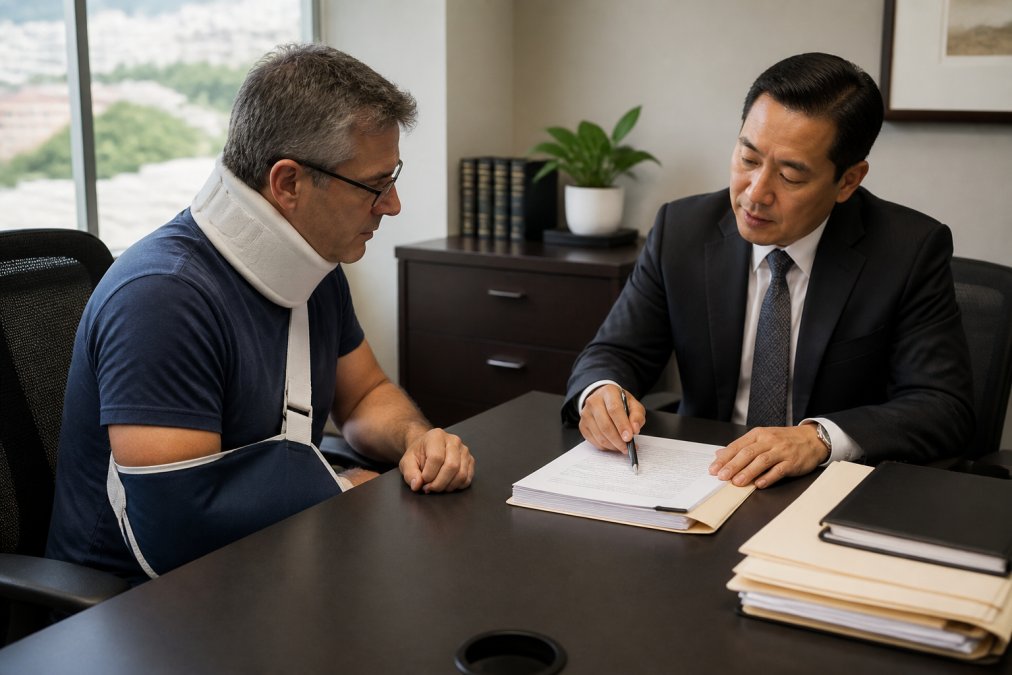
Certain situations demand immediate legal representation. If you suffered serious injuries requiring hospitalization, ongoing medical treatment, or permanent disability, contact an attorney before speaking with insurance adjusters. If the accident involved multiple vehicles, uninsured drivers, or disputed fault, legal representation becomes essential. If the at-fault driver’s insurance company is denying liability or offering inadequate compensation, you need an advocate.
Even if your injuries seem minor, consultation with an attorney costs nothing and provides valuable perspective. Many motorcycle accident injuries develop over weeks or months.
Cummings Law offers free case evaluations for motorcycle accident victims. During consultation, we assess the strength of your claim, explain your legal options, and discuss realistic compensation ranges based on your specific injuries and circumstances. Our team works on a contingency basis, meaning you pay no attorney fees unless we recover compensation on your behalf.
Insurance adjusters are trained negotiators working to minimize payouts. They may contact you directly, request recorded statements, or pressure you to settle quickly. An attorney protects your interests by handling all communications with insurers and ensuring you receive fair compensation.
Early representation ensures nothing is overlooked. The longer you wait, the more evidence may be lost or memories fade.
Common Mistakes to Avoid After a Motorcycle Accident
Motorcycle accident victims often make decisions in the immediate aftermath that severely damage their cases.
Accepting the first settlement offer. Insurance companies often make initial offers that are 30-50% below fair value. Do not accept any settlement without consulting an attorney. You cannot reopen a closed claim.
Providing recorded statements to insurance adjusters. These statements are used to establish admissions that reduce your claim value. You have no obligation to provide recorded statements. Politely decline and refer the adjuster to your attorney.
Posting on social media. Insurance adjusters monitor social media looking for evidence that contradicts injury claims. Do not post about the accident, your injuries, or your recovery.
Failing to seek immediate medical attention. Some injuries develop over hours or days. Seek medical evaluation immediately, even if you feel okay initially.
Discussing fault or admitting responsibility. Casual comments at the scene can be used against you. Stick to factual observations.
Delaying contact with an attorney. The longer you wait, the more evidence is lost and memories fade. Contact an attorney within days of the accident.
Failing to preserve evidence. Organize and store photographs, video, witness contact information, and medical records safely.
Accepting liability for the accident. Even if you believe you were partially at fault, do not admit this to insurance companies. Hawaii’s modified comparative negligence standard allows you to recover compensation even if partially responsible, as long as your fault does not exceed the other party’s negligence.
Ignoring ongoing injuries. If you develop new symptoms or your condition worsens, seek medical attention immediately and inform your attorney.
Motorcycle accidents in Hawaii create complex legal and financial challenges. The immediate steps you take, documenting evidence, reporting the accident, seeking medical care, and contacting an attorney, directly determine your ability to recover fair compensation. Insurance companies are sophisticated negotiators trained to minimize claims. Cummings Law protects your interests by handling communications with insurers, investigating your case thoroughly, and fighting for the compensation you deserve. Our team has recovered over $47 million for injury victims. Contact Cummings Law for a free consultation and learn how we can help you navigate your motorcycle accident claim.
=== FAQ ANSWERS (audit these too, same rules) ===
[1] Q: What is the statute of limitations for filing a motorcycle accident claim in Hawaii?
A: Hawaii law provides a two-year statute of limitations for filing a personal injury lawsuit, including motorcycle accident claims, under Hawaii Revised Statutes § 657-7. This deadline begins on the date of the accident. If you miss this window, you lose your right to pursue legal action. Acting quickly and consulting an attorney early protects your ability to recover compensation for medical bills, lost wages, and pain and suffering.
[2] Q: How does no-fault insurance affect motorcycle accident claims?
A: Motorcyclists in Hawaii are generally excluded from the state’s no-fault insurance system. Unlike car drivers, you do not automatically receive Personal Injury Protection (PIP) benefits from your own motorcycle policy. Instead, you must seek compensation directly from the at-fault driver’s bodily injury liability coverage. This makes documenting fault and the other driver’s negligence especially critical for your claim.
[3] Q: What evidence should I collect at a motorcycle accident scene?
A: Photograph the accident scene from multiple angles, including vehicle damage, road conditions, traffic signs, and skid marks. Collect contact information and insurance details from the other driver. Get names and phone numbers from witnesses. Note the date, time, weather, and road conditions. Request the police report number. Take photos of your injuries and document any medical treatment. This evidence strengthens your claim and helps prove the other driver’s liability.
[4] Q: Is it too late to hire an attorney if my accident happened months ago?
A: No, it is not too late as long as you are within the two-year statute of limitations. Even if you’ve been handling your case alone, an experienced attorney can still investigate, gather evidence, and negotiate with insurance companies on your behalf. However, the sooner you act, the better, witnesses’ memories fade, evidence can be lost, and the insurance company may have already made a low offer. Contact an attorney immediately to protect your rights.
Frequently Asked Questions
What is the statute of limitations for filing a motorcycle accident claim in Hawaii?
Hawaii law provides a two-year statute of limitations for filing a personal injury lawsuit, including motorcycle accident claims, under Hawaii Revised Statutes § 657-7. This deadline begins on the date of the accident. If you miss this window, you lose your right to pursue legal action. Acting quickly and consulting an attorney early protects your ability to recover compensation for medical bills, lost wages, and pain and suffering.
How does no-fault insurance affect motorcycle accident claims?
Motorcyclists in Hawaii are generally excluded from the state's no-fault insurance system. Unlike car drivers, you do not automatically receive Personal Injury Protection (PIP) benefits from your own motorcycle policy. Instead, you must seek compensation directly from the at-fault driver's bodily injury liability coverage. This makes documenting fault and the other driver's negligence especially critical for your claim.
What evidence should I collect at a motorcycle accident scene?
Photograph the accident scene from multiple angles, including vehicle damage, road conditions, traffic signs, and skid marks. Collect contact information and insurance details from the other driver. Get names and phone numbers from witnesses. Note the date, time, weather, and road conditions. Request the police report number. Take photos of your injuries and document any medical treatment. This evidence strengthens your claim and helps prove the other driver's liability.
Is it too late to hire an attorney if my accident happened months ago?
No, it is not too late as long as you are within the two-year statute of limitations. Even if you've been handling your case alone, an experienced attorney can still investigate, gather evidence, and negotiate with insurance companies on your behalf. However, the sooner you act, the better, witnesses' memories fade, evidence can be lost, and the insurance company may have already made a low offer. Contact an attorney immediately to protect your rights.
This article was written using GrandRanker