Quick Summary
You request a Hawaii crash report from the agency that responded to the crash, usually the county police department, and pay a fee set by that agency. Fees vary by agency and copy type, and certified copies cost more than standard ones. Confirm the current amount and the requirements with the responding agency before you pay.
- Each agency sets its own fee schedule, so check the responding agency’s current published fees.
- Certified copies carry an agency seal and cost more than standard copies.
- In-person pickup is usually cheapest, while mailed copies may add postage or handling.
- Bring the crash date, location, driver names, case number if available, and valid photo ID.
- Reports may take several business days to a couple of weeks to be released.
Table of Contents
- Why a Hawaii Crash Report Matters After an Accident
- Hawaii Crash Report Cost: What You Will Pay
- Who Can Request a Hawaii Accident Report
- Crash Report Request Requirements: What to Have Ready
- Step-by-Step: How to Make a Hawaii Accident Report Request
- Getting a Hawaii Accident Report Online and Other Options
- Correcting Errors and Using Your Report in a Claim
- Get Help Reviewing Your Crash Report With Cummings Law
- Frequently Asked Questions
Why a Hawaii Crash Report Matters After an Accident
Last Updated: November 21, 2026
If you were in a crash in Hawaii, the police crash report is often the first official record of what happened. A clear, accurate report can shape an insurance claim. For the steps to take right after a crash, see our step-by-step guide after a motorcycle accident.
A crash report usually records the date, time and location of the collision, the drivers and vehicles involved, and the officer’s notes on what happened. Insurers often ask for it early. Adjusters may use it to decide who was at fault, so reviewing it carefully matters.
Hawaii also sets a reporting threshold. Under Hawaii Revised Statutes § 287-4, a crash must be reported when apparent property damage exceeds $3,000, and notice must be given at the earliest practical time and within 24 hours. Verify the current statute with the Hawaii Revised Statutes § 287-4 text as reproduced by Justia before relying on it.
Hawaii Crash Report Cost: What You Will Pay
Crash report fees are set agency by agency, so the price you pay depends on which department responded to your collision. Fees are set by each agency and can change, so check the responding agency’s current published schedule before requesting a copy.
Other county police departments and the state Department of Transportation set their own schedules. Other agencies may set their own flat or per-page fees, and certified copies typically cost more than standard copies. Because these schedules change, confirm the current amount with the records unit of the responding agency before you pay. You can review the Hawaiʻi Police Department’s guide to getting a police report for the latest published fee information from that agency.
Several cost variables are worth knowing before you request a copy:
- Standard versus certified copy. A certified copy carries an agency seal and is often required when the report will be filed with a court or attached to a formal demand package. Expect to pay a premium over the standard copy fee.
- Page count. Reports with multiple vehicles, injuries, or witness statements run longer, and per-page pricing adds up. Ask the records unit for the page count before you pay if the fee is page-based.
- Delivery method. In-person pickup is usually the least expensive option. Mailed copies may carry a postage or handling charge, and some agencies add a convenience fee for online or credit card payment.
- Photographs and supplemental materials. Some departments sell crash-scene photographs, vehicle inspection reports, or supplemental officer narratives separately from the report itself.
- Third-party vendors. Online report-retrieval services may charge a markup over the agency’s fee. Compare the vendor’s total against the agency’s published schedule before paying.
Online report-retrieval services may add a markup over the agency’s fee, so compare any vendor’s total against the agency’s published schedule.
If you are requesting reports from more than one agency, for example, a county police department and the state highway agency, budget for each separately, since neither will honor the other’s fee schedule. Keep your receipts for any report fees you pay.
The article lists several cost variables to budget for before requesting a copy.
| Cost factor | What it affects | Note |
|---|---|---|
| Standard vs. certified copy | Fee amount | Certified copies carry an agency seal and cost more |
| Page count | Per-page pricing | Multi-vehicle or injury reports run longer |
| Delivery method | Postage or handling | In-person pickup is usually cheapest |
| Photos and supplements | Extra charges | Sold separately from the report |
| Third-party vendors | Markup over agency fee | Compare totals against the published schedule |
Who Can Request a Hawaii Accident Report
Generally, people directly involved in the crash can ask for the report. This often includes drivers, passengers, and vehicle owners. Injured parties and their legal representatives may also be able to request it.
Because rules about who may receive a report can vary, confirm eligibility with the agency that responded to the crash.
Crash Report Request Requirements: What to Have Ready
Each agency sets its own request procedure, but the information that lets a records clerk locate your report is consistent. Having it ready before you call or visit is the difference between a same-day copy and a return trip.
Core details the agency needs:
- The date and approximate time of the crash
- The location, described as precisely as you can, street address, intersection, or highway mile marker
- The names of the drivers involved
- The report or case number, if the officer gave you a card at the scene
- Your valid photo ID
- Payment for the copy fee, in the form the agency accepts
Requester categories and what each typically needs to show: (Source: Hawaiʻi Police Department’s guide to getting a police report)
- Drivers and vehicle owners. Usually the simplest request. Photo ID and the crash details are generally enough.
- Passengers and injured parties. May need to show they were involved in the crash, a passenger name on the report, a medical record from the date of the crash, or an insurance claim number.
- Attorneys and legal representatives. Typically submit a written request on letterhead with a signed authorization from the client. Many agencies have a dedicated records-request form for this.
- Insurance adjusters. Check with the agency about how insurer requests are handled and whether a different rate applies.
- Family members of a deceased or incapacitated party. Often need to document their relationship or legal authority, such as a power of attorney or estate representative document.
Timing and availability. A crash report is not always ready the day after the collision. Officers complete their narratives and supervisors review them before the report is released, and a common pattern is a wait of several business days to a couple of weeks. If you request too early, the records unit may tell you the report is still pending. Ask for the expected release date and whether the agency will notify you when it is available.
What to do if the agency cannot find the report. Confirm the spelling of every name, the exact date, and the location as the officer recorded it. A report filed under a slightly different street name or a driver’s legal name rather than a nickname can be hard to locate. If the crash happened on a state highway, the report may be held by the state transportation agency rather than the county police department.
A practical checklist by work situation. If the report will support a lost-earning-capacity claim, the records you gather alongside it should match how you earn:
- Hourly workers: pay stubs, timecards, and employer attendance records for the period before and after the crash.
- Self-employed people: invoices, 1099s, client contracts, and profit-and-loss statements that show income trends.
- Students: enrollment records, tuition statements, and any part-time employment records.
- Workers with variable income: commission statements, seasonal earnings histories, and multiple years of tax returns.
Confirm the requester category and any required authorization with the agency before you submit a request.
Once you have the report, compare its vehicle, injury, and witness details against your own records.
Step-by-Step: How to Make a Hawaii Accident Report Request
Follow these steps to request your report:
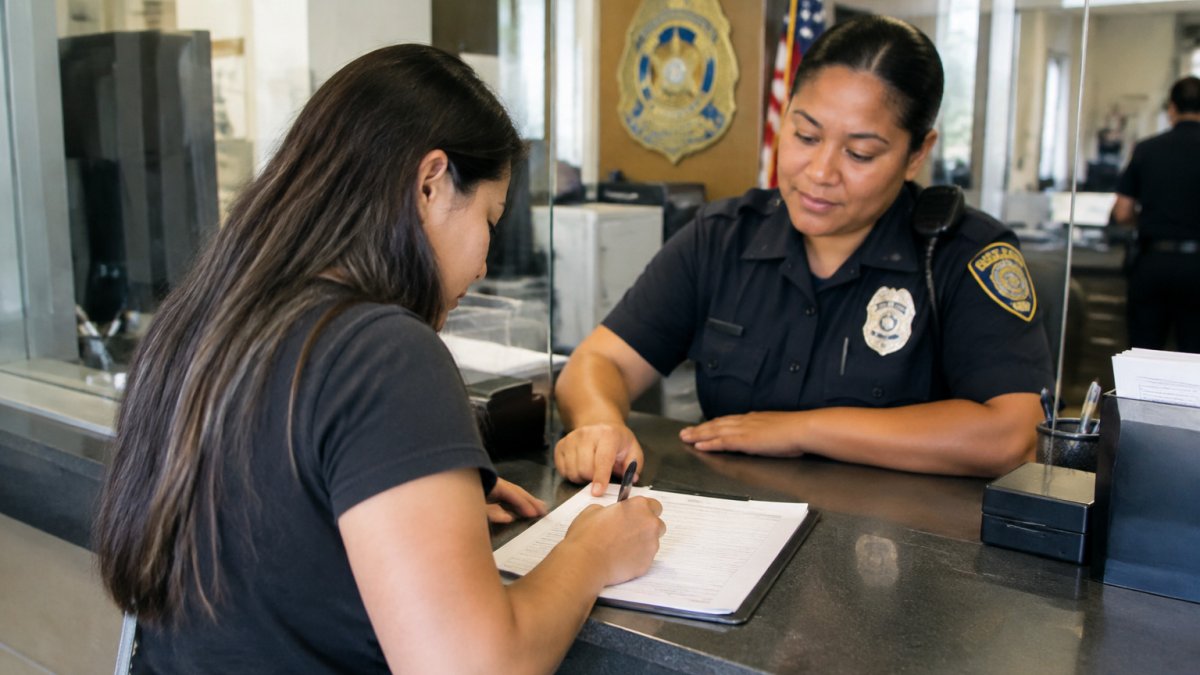
- Gather your crash details. Collect the date, location, and names listed above.
- Identify the responding agency. This is usually the county police department where the crash happened.
- Choose how to request it. You can go in person, call the district station, or submit a written request.
- Provide your information. Give your name, contact details, and proof of identity.
- Pay the fee. Confirm the current amount and accepted payment methods.
- Receive your report. Ask when it will be ready and how you will get it.
Cummings Law can help you understand what your report says once you have it.
Getting a Hawaii Accident Report Online and Other Options
Some agencies offer online request options, while others require in-person or written requests. If you need a crash report that also explains the details insurers look for, see our Hawaii police report guide for insurance claims. Check the agency’s website to see which options apply to your crash. If you cannot visit in person, a written request or phone call to the district station may be an option.
If you need help sorting out which option fits your case, we are glad to talk it through. You can also read our guide on how to get a police report after a Hawaii accident for more detail.
Correcting Errors and Using Your Report in a Claim
Review your report as soon as you receive it. Check names, dates, vehicle details, and the officer’s description of events. If something is wrong, contact the agency to ask about correcting it.
Keep copies of your report and related records. For guidance on how long to keep them, see our article on how long to keep a Hawaii accident report. If you plan to use the report in a claim, our page on how to prove negligence in a Hawaii car accident claim explains what matters.
Get Help Reviewing Your Crash Report With Cummings Law
A crash report can be hard to read, and small errors can affect your claim. Cummings Law, led by Brian Cummings, helps injured people in Hawaii review their reports and pursue compensation. The firm works on a contingency basis, so there are no upfront attorneys’ fees or court fees until your case is successfully resolved.
Call for a consultation! Get clear answers about your report and your options.
Frequently Asked Questions
How do I get a Hawaii crash report?
You can request a Hawaii police report in person, by calling the district station handling your accident, or by submitting a written request. The Hawaii Police Department publishes its request options on its website, so check there for the station and form that apply to your county before you go. Bring identifying information about the accident, such as the date, location, and names of those involved, to help staff locate the correct record.
How much does a Hawaii crash report cost?
Fees and procedures can vary by county and report type, so confirm the current amount with the station that holds your record before paying. Always verify the current fee with the official source.
Who is eligible to request a Hawaii crash report?
Eligibility rules are set by state and county policy, so confirm the current requirements with the Hawaii Police Department before filing a request. Parties involved in an accident and those acting for them, such as attorneys or insurers, commonly request these reports, but verify who qualifies for the specific record you need. Ask the station directly if you are unsure whether you can receive a copy.
What should I do if information in my crash report is incorrect?
If your report contains errors, such as wrong names, vehicle details, or a mischaracterized sequence of events, contact the reporting agency to ask about its procedure for requesting a correction or supplemental information. Keep your own documentation, including photos, witness contacts, and repair estimates. Cummings Law can review your report and help you decide how an error might affect your personal injury claim.