Table of Contents
- What Qualifies as Medical Malpractice?
- Medical Malpractice Statute of Limitations: Do Not Wait
- How Medical Malpractice Attorney Contingency Fees Work
- Questions to Ask a Malpractice Lawyer Before You Hire
- Compensation a Medical Malpractice Attorney Can Recover for You
- Checklist: Gathering Medical Records Before Your Consultation
- How to Hire the Right Attorney: A Step-by-Step Guide
- Conclusion
Last Updated: August 13, 2026
Medical malpractice cases are among the most legally complex personal injury claims a person can face. At Cummings Law, we’ve guided countless Hawaii families through holding negligent medical providers accountable. This guide covers how to hire a medical malpractice attorney in Hawaii, what legal hurdles you’ll face, and what compensation you may recover. One critical point most guides miss: Hawaii has a mandatory administrative step that can kill your case if you miss it.
What Qualifies as Medical Malpractice?
Medical malpractice occurs when a healthcare provider fails to meet the accepted standard of care, directly injuring a patient. Not every bad outcome is malpractice, medicine carries inherent risk. The critical distinction is whether the provider acted as a reasonably skilled professional in the same field would have under similar circumstances.
Common Types of Medical Negligence Claims
Medical negligence takes many forms:
- Failure to diagnose or misdiagnosis: A doctor misses cancer, a heart attack, or another serious condition that a competent physician would have caught.
- Surgical malpractice: Operating on the wrong site, leaving instruments inside a patient, or performing a procedure incorrectly.
- Medication errors: Prescribing the wrong drug, wrong dosage, or failing to account for dangerous drug interactions.
- Birth injury claims: Errors during labor and delivery resulting in cerebral palsy, brachial plexus injuries, or hypoxic brain damage.
- Anesthesia errors: Administering too much or too little anesthesia, or failing to monitor a patient’s response.
- Failure to obtain informed consent: Performing a procedure without adequately explaining risks, benefits, and alternatives.
Proving Breach of Duty and Causation
Winning a malpractice case requires proving four elements: duty, breach, causation, and damages. Once a doctor-patient relationship exists, duty is established. The harder fight is over breach and causation.
Breach means the provider deviated from the standard of care. Causation means that deviation produced your harm. Courts require a qualified medical expert to testify that the defendant’s conduct fell below accepted standards and caused your specific injury. Without a credible expert, even a strong case will not survive.
Do not assume that a poor medical outcome automatically proves malpractice. Insurance companies aggressively challenge causation. Without documented evidence linking the provider’s error to your specific harm, a claim can fail even when negligence is obvious.
Medical Malpractice Statute of Limitations: Do Not Wait
The medical malpractice statute of limitations sets a hard deadline for filing your claim. Miss it, and your right to compensation is gone permanently.
According to the Hawaii Revised Statutes on medical tort claims, patients generally have a limited window from the date they discovered or reasonably should have discovered the injury. Because these deadlines contain nuances based on discovery date, minor status, and wrongful death claims, consult an attorney immediately rather than calculating the deadline yourself.
A common mistake is waiting to see whether an injury resolves on its own. Many patients spend months in additional treatment before accepting the original error caused lasting damage. By then, the filing window can be dangerously close. The moment you suspect medical negligence, get a legal consultation.
Hawaii’s Medical Inquiry and Conciliation Panel (MICP): A Step-by-Step Overview
Before filing a medical malpractice lawsuit in Hawaii state court, plaintiffs must bring their claim before the Medical Inquiry and Conciliation Panel. The MICP is a mandatory administrative proceeding designed to give both sides a chance to resolve disputes before formal litigation.
- File a claim with the MICP. Submit a written complaint identifying the healthcare provider, alleged negligence, and nature of injuries. Filing tolls the statute of limitations.
- The panel is convened. The MICP panel typically includes a physician, attorney, and layperson.
- Discovery and exchange of records. Both sides submit medical records, expert opinions, and supporting documentation.
- Hearing. The panel hears from both sides in a formal proceeding where attorney preparation matters.
- Panel findings. The panel issues findings on whether malpractice likely occurred. These are not binding but can be introduced as evidence in court.
- Proceed to litigation if needed. If unresolved, you may file suit in circuit court.
Filing your MICP claim and court lawsuit require different documentation and strategies. An attorney who handles medical malpractice regularly will use the MICP process strategically rather than treating it as a bureaucratic hurdle.
How Medical Malpractice Attorney Contingency Fees Work
Medical malpractice attorney contingency fees are the standard payment structure. On a contingency basis, you pay no attorney’s fees unless your case results in recovery. The attorney’s fee is a percentage of the final settlement or verdict, aligning their financial interest with yours.
Cummings Law operates on this model: no attorneys’ fees or court fees until the case is complete. The firm absorbs investigation, expert witness, filing, and litigation costs upfront. Before signing any fee agreement, ask your attorney to explain the percentage, whether litigation costs are deducted before or after the fee, and what happens to costs if the case is lost.
The contingency model acts as a natural filter. Attorneys who work this way are selective because they invest real resources in each case. If an attorney on contingency agrees to represent you, that signals they believe your case has merit.
Questions to Ask a Malpractice Lawyer Before You Hire
The consultation is your interview of the attorney. Ask these questions before committing:
- How much of your practice is dedicated to medical malpractice? General personal injury experience differs from malpractice experience. You want someone who handles these cases regularly.
- Have you taken malpractice cases to trial? Settlement negotiations differ from trial advocacy. Insurance companies pay more attention to attorneys with genuine courtroom records.
- Who will actually work on my case? Know who your day-to-day contact will be.
- What is your honest assessment of my case? A good attorney will tell you if your claim has weaknesses.
- What does your contingency fee agreement cover? Ask specifically about litigation costs and what happens if you do not recover.
- How will you communicate with me throughout the process? Lack of communication is the most common client complaint.
The American Bar Association’s guidance on hiring a lawyer recommends requesting a written fee agreement before any legal work begins.
Compensation a Medical Malpractice Attorney Can Recover for You
Compensatory damages fall into two categories: economic and non-economic.
Economic damages include:
- Past and future medical expenses related to the malpractice
- Lost wages and diminished future earning capacity
- Cost of ongoing rehabilitation, home care, or assistive devices
Non-economic damages include:
- Pain and suffering
- Emotional distress
- Loss of enjoyment of life
- Loss of consortium for a spouse or family member
In wrongful death cases, additional damages apply, including loss of financial support and loss of companionship.
Cummings Law has obtained over $47,000,000 for clients in recent years, including a $15 million settlement, a $10 million settlement, a $2.75 million settlement, and a $1.995 million settlement.
Calculating Non-Economic Damages and Caps
Non-economic damages are harder to calculate because there is no invoice. Attorneys use methods including the "multiplier method," which applies a factor to economic damages based on injury severity, and the "per diem method," which assigns a daily dollar value to pain and suffering.
Hawaii law places limits on non-economic damages in certain medical tort claims. Per the Hawaii Revised Statutes Chapter 663, specific caps apply in some malpractice contexts. Because these are subject to legislative change and judicial interpretation, confirm current limits with your attorney.
Non-economic damages are often the largest component of [a malpractice](/2025/09/01/top-4-qualities-of-a-trusted-medical-negligence-attorney/) recovery. An attorney who understands how to document and present pain, suffering, and life disruption to a jury significantly affects the final amount.
Checklist: Gathering Medical Records Before Your Consultation
Organize your documentation before meeting with an attorney. They can evaluate your case faster and more accurately when you arrive prepared.
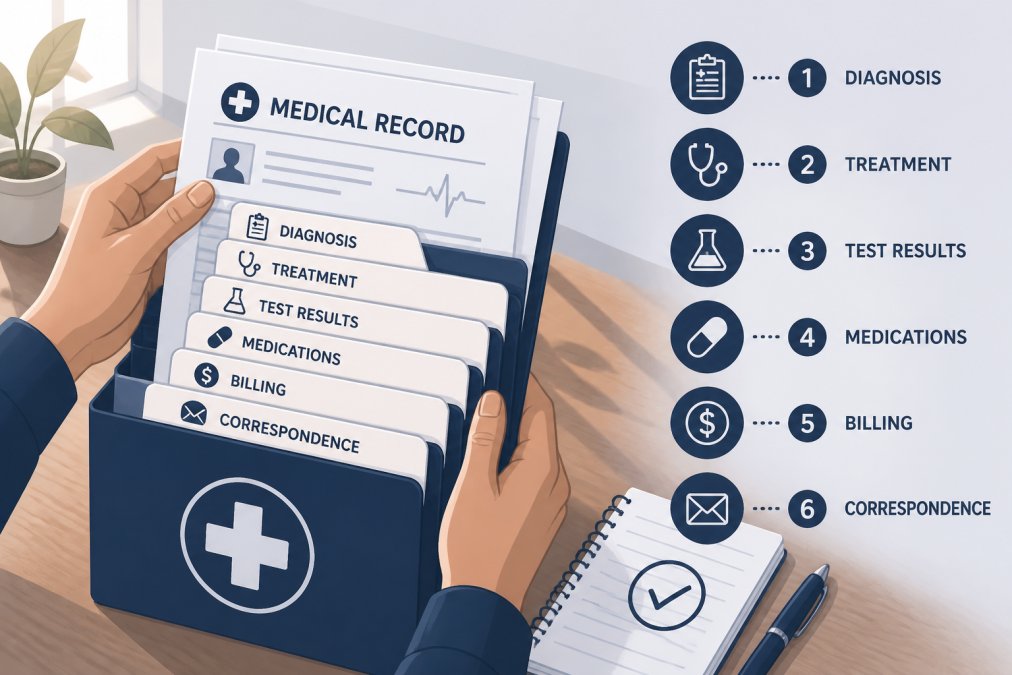
- Request complete medical records from every provider involved, including admission notes, discharge summaries, operative reports, nursing notes, and lab results
- Obtain imaging studies and accompanying radiology reports
- Collect all billing statements and insurance explanation-of-benefits documents
- Write a detailed timeline of events, including dates, names of providers, what was said, and what changed in your condition
- Preserve written communications with providers, including patient portal messages and prescription records
- Document your symptoms and their impact on daily life, including missed work and emotional effects
- Gather contact information for witnesses, including family members present during treatment
- Note the names and license numbers of every physician, nurse, or specialist who treated you
Under the HIPAA right of access provisions, you have the legal right to request copies of your own medical records. Providers must fulfill requests within 30 days.

How to Hire the Right Attorney: A Step-by-Step Guide
Choosing the right medical malpractice attorney requires a practical process.
Step 1: Identify attorneys who focus on medical malpractice. Look for attorneys or firms where malpractice cases represent a substantial portion of the practice.
Step 2: Review case results. Past settlements and verdicts signal experience and capability. Look for results in cases similar to yours.
Step 3: Schedule consultations with more than one attorney. Most malpractice attorneys offer free initial consultations. Use this to assess legal knowledge, communication style, and whether the attorney understands your situation.
Step 4: Evaluate responsiveness. How quickly did the firm return your call? How clearly did they explain the process?
Step 5: Review the fee agreement carefully. Confirm the contingency percentage, how litigation costs are handled, and what happens if you discharge the attorney mid-case.
Step 6: Trust your assessment. Medical malpractice litigation can take years. You need an attorney you can communicate with honestly.
| Step | Action | What to Look For |
|---|---|---|
| 1 | Identify malpractice-focused attorneys | Malpractice as primary practice area |
| 2 | Review case results | Settlements and verdicts in similar cases |
| 3 | Schedule multiple consultations | Free initial consultation offered |
| 4 | Evaluate responsiveness | Prompt, clear communication |
| 5 | Review fee agreement | Contingency terms, cost handling |
| 6 | Make your decision | Confidence in the attorney’s commitment |
The Hawaii State Bar Association lawyer referral service can help you identify licensed attorneys who handle medical malpractice matters.
Medical malpractice cases demand attorneys who understand both the medicine and the law, with resources to fight insurance companies that routinely dispute well-documented claims. Cummings Law brings personalized attention, comprehensive legal knowledge, and a track record of over $47 million recovered for clients to every case. Led by Brian Cummings, whose courtroom performance is well-respected across Hawaii’s legal community, the firm works on full contingency so financial pressure never forces you into an undervalued settlement. Call Cummings Law for a consultation and take the first step toward the compensation you deserve.
Frequently Asked Questions
How do I know if I have a valid medical malpractice claim?
A valid medical malpractice claim generally requires four elements: a doctor-patient relationship existed, the provider deviated from the accepted standard of care, that deviation directly caused your injury, and you suffered measurable damages as a result. Diagnostic errors, surgical mistakes, birth injuries, and failures to obtain informed consent are among the most common qualifying situations. The clearest way to find out whether your situation meets these criteria is to schedule a free case evaluation with a medical malpractice attorney who can review your medical records and advise you honestly.
What is the statute of limitations for medical malpractice cases in Hawaii?
Hawaii law sets strict deadlines for filing medical malpractice claims. Missing the deadline almost always bars you from recovering any compensation, regardless of how strong your case is. The clock can start from the date of the negligent act or from when you discovered, or reasonably should have discovered, the injury. Because the rules involve nuances around discovery and tolling, you should consult a medical malpractice attorney as soon as possible rather than assume you have time to spare.
How are medical malpractice attorney fees structured?
Most medical malpractice attorneys work on a contingency fee basis, meaning you pay no upfront attorneys' fees or court costs. The attorney's fee is a percentage of the compensation recovered, collected only if your case is successfully resolved. This arrangement lets injured patients access experienced legal representation without financial risk. Before signing any agreement, ask your attorney exactly what expenses are covered under the contingency arrangement and what happens to case costs if no recovery is made.
Is it worth suing for medical malpractice?
For many patients, yes. A successful medical malpractice claim can recover compensatory damages for medical bills, lost income, ongoing care costs, and pain and suffering. In cases involving extreme misconduct, punitive damages may also be available. Beyond financial recovery, litigation can hold negligent providers accountable and create pressure for systemic improvements in patient safety. An experienced medical malpractice attorney can assess the realistic value of your claim during a free initial consultation, giving you the information needed to make an informed decision.
This article was written using GrandRanker